Showing posts with label Bordeaux. Show all posts

Sunday, 29 July 2018

Heaven made in Cheese

29 Jul 2018:
Champagne and Langres - heaven made in cheese!


It was the perfect occasion to share a beautifully aged Langres, with a few good friends and a bottle of 1996 Dom Pérignon. (Well, we actually needed two bottles so that we could have spare some for pouring into the cheese!)

Langres is a soft washed rind full-fat cow's milk cheese, with a wrinkly golden yellow to orange rind, sometimes covered with white down and an ivory paste. The 18th century cheese owes its name to the town of Langres, a historic fortified town in the Haute-Marne region of Champagne that boasts 3.5 km of remparts offering strategic views of the Marne Valley and beyond to the Vosges Mountains, as well as 12 towers and 7 gates. The Langres cheese is easily recognised by a concave hollow, known as the "fountain" (or "la fontaine"), reminiscent of the fortified remparts of its namesake town. This concave feature which becomes more pronounced with age, is due to the flattened cone-shaped terracotta moulds (called "fromottes") used in the making of the cheese and the fact that the cheese is not turned during its ageing process. Once turned out, the cheese is dried on platane leaves in wicker cages. The ageing process usually lasts a minimum of 3-4 weeks (usually longer, and total time depending on the size). Langres comes in 3 sizes: small (150-250 g), medium (280-350g) and large (800-1300g). The colour is due to the washing with brine and the natural annatto giving the cheese its distinctive colour. Marc de Champagne is sometimes added to the washing process to intensify the flavours.

The rind is sticky to the touch, with a brilliant sheen to its coat. It has an intense pungency on the nose, and on the palate, the dense texture passes from firm and chalky/grainy to a velvety soft creaminess that melts in your mouth, with extended ageing. The mildly salted umami-accented flavours remind one of fermented soya beans, dried citrus peel, and a farmyard note. The finish is long. It is no surprise that it is often referred to as the cousin of Epoisses.

The hearty gourmands would pour Marc de Champagne into the hollow. In my version last night, I made a cross in the top of the cheese, poured our champagne into the hollow until it overflows. I then left it to let the cheese soak up the champagne for almost an hour and a half before I served it. I dug a well into the cheese prior to serving, mixed around the cheese and champagne into a creamy, if slightly messy-looking mixture and served. The result was stunning - the champagne characters of mushroom, hazelnuts and caramelised apple notes complemented the complexity, and lent just a touch of acidity (see below wine note) to balance the creaminess of the cheese. It was a heavenly "mess"!

Heavenly "mess"!

On my cheese board last night (see below), I also served a Rove des Garrigues, one of my favourite goat cheeses from France. The local breed of Rove goats in the Provence/Midi-Pyrénées roam the garrigue-grown land and the aromas of the wild flora and herbs (wild thyme, juniper, wild rosemary, broom) find their way into the organoleptic profile of this wonderful fresh goat cheese. Serving it at its prime, this little round ball of cheese had a slightly wrinkly cream-coloured coat that was almost lifting from the soft white paste when cut. It had a refreshing citrus lactic tang, and a delicate herbal note, with a creamy texture that lingered most delicately. A tiny cheese that packs a lot in!
The cheese board with Tomme aux fleurs, Beaufort Chalet d'Alpage, Reblochon, Brie de Meaux, Langres, Lavort, Le Parthenay and Rove des Garrigues.

Langres and Champagne, a heavenly pairing!

As for the wines of the night, here are my short tasting notes:


1996 Dom Perignon: I would have liked this to be more zingy, more fresh.  It was a beautifully matured champagne, with a creamy mousse, nuances of mushroom, hazelnut, honey, caramelised apple shortbread notes, but to me, it lacked energy and tasted a bit flat and unexciting. However, I only tried one of the two bottles.  According to Richard who tasted from both, both bottles were very similar. 16.5/20

2010 Mount Mary Triolet: A blend of around 75% Sauvignon Blanc, with some 20% of Semillon and some Muscadelle from Yarra Valley.  It was a harmonious wine with measured acidity, notes of honey, toast and straw, with a medium length finish. 17.5/20

1982 Grand Puy Lacoste (in magnum): A very attractive bouquet of cedar, leather and tobacco, with just a hint of graphite and herbaceous note. It was elegantly structured, with pleasant acidity and a long finish. Drinking at its peak now, but would hold for another 8-10 years in large formats. 18/20

1982 Mouton Rothschild (in magnum): A more muscular version from the 1982 vintage, with smokey, dried blackberry, cassis, and black tea notes, with just a hint of leather.  It took a while to unfold in the glass and it revealed a robust structure, with ripe velvety tannins, and a soft acidity. The finish was long.  This was a classy claret still very much in its prime and would probably take at least 5-8 years to reveal its best, depending on the format.  19.5/20

2004 Climens: I did not taste this. I was told it was delightfully fresh and not a waste at all to taste it in its youthful stage.


Thursday, 26 April 2018

An Epic Cheese, Food and Wine Pairing Evening

25 April 2018
This started off as a somewhat ambitious attempt to stage a multi-course cheese and wine pairing, alongside a wine and food pairing for each course. A few friends volunteered to join me on this educational “expedition”.  To ensure that we have a fresh palate to vote on the best cheese and wine pairing, I insisted on tasting the cheese first before the pairing dish for each course. 

The Wine Selection


The Cheese Selection


Course 1
The first course was paired by a champagne:
2002 Pierre Péters Blanc de Blancs Grand Cru Cuvée Spéciale Les Chétillons: This bottle was much fresher than the last 2 bottles we tried from the same case. This was classy Blanc de Blancs, with the immediate attack of ripe fruit notes (apple compote and pear), overlaid with buttered toast and brioche notes, leading to distinct mineral tones on the mid-palate, with just a hint of field mushroom character. Creamy texture, full-bodied, this was an opulent and classy wine with crystal definition and a persistent finish. 95/100

Cheese pairing:
We paired this with Brie de Melun (Seine et Marne, cow). This soft bloomy rind cow-milk cheese was intensely flavoured, with earthy aromas from the rind. The soft and creamy texture pâte showed marked saltiness and a pronounced and persistent mushroom character.

The chiselled acidity of the champagne was able to cut through the creaminess, cleansing the palate with the fine bubbles. The savoury and mushroom character of the cheese paired quite well with the mature character of the champagne. Given the unexpected freshness of this bottle, next time I would have paired this cheese with a more mature example (a 1995 Krug?).

Food pairing: I paired the champagne with the classic smoked salmon on blinis, with a lemon-flavoured crème fraiche. The fresh acidity from the lemon balanced the richness of the smoked salmon. The toasted and citrus character of the champagne complemented the flavours very well.

Course 2
The next course was paired with a set of wines based on Sauvignon Blanc:
2008 Silex, Didier Dagueneau: 100% Sauvignon Blanc. A rich and powerful wine, layered with overt notes of tropical and green fruit, mango and gooseberry, lifted with refreshing acidity, delivering a remarkable balance and long persistent finish. A Sauvignon Blanc not like others, very distinct. 94/100

2011 Aile d’Argent: A blend of 60% Sauvignon Blanc, 38% Semillon and 2% Muscadelle. The Semillon seemed to have taken over the characters of this wine. The bouquet was floral, peach, pear, with honey and nutty nuances. On the palate, it tasted phenolic, leaving a slightly bitter note at the finish. A rich and opulent wine, balanced but somehow lacking in precision to rank it amongst the finest from Bordeaux. 90/100

Cheese pairing:
I served two goat cheeses: Mothais sur Feuille (Deux Sèvres, goat) and Selles sur Cher (Touraine, goat). Here, we agreed that the pairing was best when we paired the cheese and wine from the same region.

The Selles sur Cher with the firm texture which melted in the mouth, and the interplay of sweet, salty and citrus tangy notes, paired very well with the Silex.

The Mothais sur Feuille with its creamy, oozing texture, and the more pronounced salty and nutty character, found a better match with the Aile d’Argent.

Food pairing:
The vote was unianimous for the Silex when it came to pairing with the dish: Grilled asparagus with Iberico ham, and lemony crème fraiche.

Course 3
The third course was paired first with a pair of Syrah-based wines, followed by a Mediterranean style wine.
2000 Côte Rôtie La Turque, Guigal: This was a blend of Syrah with 7% Viognier, with fruit from the Côte Brune. The structure was initially tight and masculine, displaying ripe fine tannins and lifted with marked acidity. With aeration, it opened up to display a rich bouquet layered with notes of dark chocolate, clove spice, cassis, dates and figs. A flamboyant wine, made with precision. Long persistent finish. Drinking beautifully now, and over next 8–10+ years. 96/100

2000 Côte Rôtie La Mouline, Guigal: This was a blend of Syrah with 12% Viognier, with fruit from the Côte Blonde. This wine was at once more open and evolved than the La Turque. It was sensual aromatically and texturally, diplaying an elegant and fine-chiselled poise. The softer acidity was balanced by refined tannic structure. The bouquet was blackberry, plum, mocha and cardamom spice. An absolute beauty now, drinking so well, and will continue to do so over next 8-10 years. 95/100

1999 Château Musar: a blend of Cinsault, Carignan and Cabernet Sauvignon, each a third. Fermented in cement tanks with extended maceration, followed by a year ageing in French oak. There was the hallmark bretty gamey note, immediately followed by pronounced sauvage character of wild herbs, almost like the garrigue, and notes of prunes and plum. Good lifting acidity provided great balance to this opulent wine, with sinewy muscles. A very elegant wine. Drinking very well now and over the next 6-8+ years. 93/100

Cheese pairing:
24-month Laguiole (Aveyron, cow): the saltiness of the Laguiole and the spicy tangy and savoury notes from the extra aging worked reasonably well with the Syrahs, but I think these two Syrahs were too powerful for the Laguiole. I would pair this with a Saint Joseph or a Côtes du Rhône next time.

Mimolette Extra Vielle (Nord Pas de Calais, cow): Uncooked, pressed cow-milk cheese. Salty and savoury, with caramelised notes. The savoury character worked well with the Syrahs, and the fruitiness of the La Turque in particular went well to complement the salty character.

Ossau Iraty au Piment (Pays Basque, sheep): this pairing had the most votes. This uncooked pressed semi-hard sheep milk cheese from the Pays Basque had a slightly grainy texture, creamy and buttery in flavour, with herbaceous, nutty, floral and spicy notes. This paired very well with both Syrahs, but possibly even better with the La Mouline.

We experimented with Livarot (Normandy, cow) too. The washed rind was not too disastrous for the Syrahs – in that the wine did not taste bitter with the cheese. (I asked our friends to try both, with or without the rind.) The pungent note from the washed rind possibly worked much better with the characterful Musar.

Food pairing: I paired these wines with a 6-hour lamb shoulder with North African spices, chick peas and tomato, served with steamed ratte potatoes and Savoy cabbage. A very fine food and wine pairing, especially with the Musar.

Course 4
Final course was paired with a dessert wine.
1995 Riesling Sélection de Grains Nobles, Hugel: A golden hue. Pronounced acidity balancing the luscious sweetness. Complex notes of apricot, honey, beeswax, nuts and rye, with a slight smokey nuance. Delightfully refreshing and finishes long. 93/100

Cheese pairing:
I paired this with two different blue cheeses, just to demonstrate a bit of diversity amongst the blues.
Fourme d’Ambert (Auvergne, cow): Rich, creamy, with an open texture. Salty, with delicate notes from the blue mould, complementing the buttery and creamy notes. This paired brilliantly with the SGN.

Bleu de Gex (Jura, cow): A drier style of blue cheese, with semi-firm texture, dense and close, lightly salted, spicy and pepper nuances balancing the buttery taste, finishing with a slight bitter note. This actually paired rather well with the Syrahs.

Food pairing:
It had been an epic journey…so we just settled for a sliver of kueh lapis cake, the richness of which was washed down nicely with the acidity from the SGN.

Here's a summary:

Wine
Cheese/Dish
Champagne:
Pierre Péters Les Chétillons, Le Mesnil, 2002

Brie de Melun (cow)

Smoked salmon blinis

Sauvignon Blanc-based:
Silex, Didier Dagueneau, 2008
Aile d’Argent, 2011

Mothais sur Feuille (goat)/Selles sur Cher (goat)

Grilled asparagus, Iberico ham, lemon crème fraiche

Syrah-based:
Côte Rôtie La Turque, Guigal, 2000
Côte Rôtie La Mouline, Guigal, 2000
Château Musar, 1999


24-month Laguiole (cow)/
Mimolette Extra Vieille, 24 months (cow)/
Ossau Iraty au Piment (sheep)

Slow-cooked lamb shoulder with North African spices, chick peas, potato and Savoy cabbage

Sweet Wine:
Riesling Sélection de Grains Nobles, Hugel, 1995

Fourme d’Ambert (cow)/Bleu de Gex (cow)

Kueh lapis cake


Saturday, 3 March 2018

A Fine Pair of Poitou Cheese and Charentais Wine

3 Mar 2018


A friend brought a special bottle last night - Domaine Le Petit Marand Cuvée Elise 2016 (Elise is daughter of Fabrice Papin, whose family owns this domaine - read the lovely message on the back label). Limited production of Chardonnay from the Gironde region - IGP Vin de Pays Charentais.  Only 1,830 bottles were produced. 10 months of élevage in oak barrels. Winemaker is Joël Bonneau. It was an added bonus to find that this bottle won a gold medal at the drinks business Global Chardonnay Masters in 2017! 


A grape variety not usually associated with this area of the Gironde, but I was told that the soil at the vineyard is chalk-dominated, and suited to Chardonnay.  Here the climate is warmer and more maritime than Chardonnay's spiritual home, Bourgogne.  Beeswax and white flowers dominated the nose, on the palate, there was a core of chalky minerality, with nuances of liquorice spice, Macadamia nuts and ripe pear.  Fleshy and slightly unctuous, balanced with soft acidity. Creamy and long finish.

We initially served it with the prawns and Marie Rose sauce starter, with guacamole and cherry tomatoes.  While it did a nice job, not overwhelmed by the slightly spicy sauce, it did an even better job later on when I went back to it with cheese.  I paired it with La Bonde de Gâtine, a raw goat milk cheese from the Poitou region.  La Bonde de Gâtine weighs about 150 grams, has a wrinkly charcoal-ash coated rind. It has a close and crumbly texture, giving a smooth yet dense paste, delivering ample saltiness and acidity. The characteristic fruity tang belies the mineral richness.  The generous character and vivid minerality of the Domaine Le Petit Marand wine paired beautifully with this cheese, with just enough acidity to cut through the richness of the cheese. 


About the other wines we had:
We started the evening with 2009 Dom Perignon.  The richness of the vintage was so well-carried off by the vibrancy and energy of this young Dom Perignon. Fine bubbles and creamy texture caressed the palate, delivering a serious yet approachable champagne, that is already drinking well.

With the main course, we had a magnum of Trotanoy 1990, and then a bottle of Trotanoy 1982 to finish off the evening.  Had the size of the bottles been different, we would have swapped them round. (Main course was Coq au vin blanc.) The 1990 showed more stewed plum fruit, with a slightly burnt character., with tobacco notes  It had an immediate hedonistic appeal, fleshy with a ripe and firm tannic structure, but it lacked the balance of lively acidity. No sign of waning here. Can be cellared for another 8 - 10+ years in this magnum format.

The 1982 was much more elegantly structured, with more complex bouquet of tobacco, violet and leather.  There was an understated finesse about this wine, but I felt that the fruit and the overall palate was a little weak and I would probably drink this wine in the 750 ml format within the next 4 - 5 years for optimum enjoyment. 

Tuesday, 16 May 2017

Seeking brilliance in the class of 1973

30 April 2017:
Richard and I were invited to a birthday feast in Taipei. It was a veritable feast in every sense, food and wine, at Ephernité, one of the latest culinary sensations in Taipei, run by a Taiwanese couple with French background.  The name of the restaurant "Ephernité" is coined from two words: "éphémère" and "éternité", combining two contrasting temporal concepts in this cosy yet minimalist-decor space where we get to appreciate high quality cuisine in a relaxed atmosphere. Chef Vanessa spent her formative years at L'Astrance in Paris where she honed her skills, in particular her pastry skills, before she and Claude returned to Taiwan to incorporate local ingredients (as much as possible) into her fusion style of cooking. With his Taiwanese roots, Claude, born and raised in France, looked after the wine service with extreme professionalism and dexterity. Thanks to our generous host, aka birthday boy, the wine selection was curated exclusively to celebrate the class of 1973 (with a couple of outsiders!)

The class of 1973

The Dom Ruinart Blanc de Blancs was the most expressive of the 3 champagnes from the vintage. It showed biscuity and smokey mature character but retained a great balance, precision and persistence. I would score this 19/20.  The Taittinger Comtes de Champagne showed clarity and elegance but seemed a little subdued. The Krug flaunted nuances of hazelnuts, toast, coffee and caramel, perhaps a touch overly oxidative.

Of the 3 white Bourgogne wines, the DRC Montrachet was the most complete (white) wine of the evening, with layers of complexity, harmony, richness and weight but balanced by a gracefully mature level of energy. The finished lasted incredibly long.  I gave this wine 20/20.  The Meursault Perrières, Leroy was structurally very sound, and showed exceptional crystalline purity.  It still showed incredible citrus character overlaying an age-defying minerality and linearity. There was much less expression of the Meursault character which we were somehow expecting. I scored this 17.5/20. The Musigny Blanc unfortunately suffered from cork taint character.

The Petrus, though served from a magnum, failed to show greatness, class or structure. It was marred by a little too much volatile acidity and caramelised note for my preference. The Vega Sicilia Unico also showed mild level of volatile acidity, but that rather lent to its vibrancy.  It was a well-balanced wine with elegance but it lacked expression and character.

The La Romanée was unfortunately served in a pair together with the beautifully matured Chambertin Clos de Bèze which showed remarkable energy and character, with silky texture. We loved the sous-bois, soya sauce, cardamom and mushroom notes that layered the flavours.  This was one of my top two red wines of the evening.  Very happy to score this 18/20.

Of the three red bottles from DRC, the Romanée-Conti was the hands-down winner.  It had an elegant richness, complexity profile and persistence that the other representatives of the vintage failed to deliver.  On the palate, it was harmonious, wonderfully complex and lingered on the palate. I scored this 19/20.  La Tâche suffered from the same fate as the Musigny Blanc, ie cork taint.  The Romanée St Vivant smelt and tasted quite maderised, with copious level of volatile acidity and a dry finish which suggested it should have been drunk a long while ago. 


The olive brown-hued 1875 Sercial was a great pair with the cheese selection.  The oxidative character of liquorice, roasted nuts, coffee and balsamic worked very well with the aged Comté.

Finally, we finished with a 1949 Suduiraut, which showed an amber hue, with honey, apricot, rye toast notes, a lively acidity that balanced the richness but without the heavy cloying character.  Long finish. I scored this 19/20.

1973 is often a forgotten vintage in vinous speak.  Luckily for us, we have a generous friend who enjoys celebrating his birth year with his friends, giving us the opportunity to taste and re-taste this forgotten but not forsaken vintage.  The top performers from this vintage have remained some of our most memorable wine experiences.  

To our generous host, a big thank you for sharing such memories with us!!

We look forward to returning to this high quality neighbourhood restaurant, with relaxed atmosphere, on our next visit.  In the meantime, we wish Claude and Vanessa an enchanting wedding in France this summer!

Here is our menu and wine selection (with photos of some of the dishes):


1973 Dom Ruinart Blanc de Blancs

1973 Taittinger Comtes de Champagne

1973 Krug


Amuse- bouche

- crystal caviar 魚子醬

- tête de cochon 豬頭皮肉凍

- gazpacho de pastèque 西瓜冷湯

- mousse de foie de volaille 雞肝醬慕絲


Entrée 1:

Hokkaido scallops salad 北海道干貝沙拉

Hokkaido scallop salad


1973 Meursault Perrières 1er Cru, Leroy

1973 Musigny Blanc Grand Cru, de Vogu
é

1973 Montrachet Grand Cru, DRC


Seafood:

Grilled uni risotto with white asparagus 白蘆筍海膽燉飯

Grilled uni risotto with white asparagus

Fish:

market fish/ lobster/ pineapple mousse 市場鮮魚及薔薇龍蝦


1973 Petrus (en Magnum)

1973 Vega Sicilia Unico


Meat 1: Os à moelle Bordelaise 巴西里烤牛骨髓


Summer truffle and porcini Tagliatelle 松露野菇寛扁麵


1973 La Romanée, Albert Bichot

1973 Chambertin Clos de Bèze, Rousseau


Meat 2: Tealeaves smoked Pigeon/ foie gras/ farm vegetables 茶燻乳鴿/ 茶樹蜜鴨肝/ 時蔬


1973 Romanée St. Vivant, DRC

1973 La Tâche, DRC

1973 Romanée-Conti, DRC


Meat 3: Japanese wagyu ribeye/ sauce bourguignon

鹿兒島黑毛和牛肋眼/ 勃根第牛肉醬汁


Assortiment de fromage: 起司盤

truffled Camembert /crottin de chavignol/ Comté 18months/ Blue cheese/ Brie


1875 Sercial Madeira Reserva, d’Olivera

Desserts: 甜點

grilled fresh peaches/ thym/ dacquoise

So pretty ....and tasty too!


1949 Suduiraut 

Birthday cake: 生日蛋糕

chocolate raspberry birthday cake


Mignardises: 小茶點三式

Seasalt caramel macaron/ madeleine/ pâte de fruits

Monday, 30 January 2017

1982 vs 1983 Margaux

26 January 2017: Despite the dropping out of our guest of honour who would have given special meaning to this dinner, a smaller group of us sat down for a cosy dinner and the comparison of two vintages of Château Margaux: 1982 vs 1983. 1982 was the great Bordeaux vintage and 1983 was the first vintage made by the late Paul Pontallier who had just arrived at the Château as the new régisseur in time for the vintage. In our small way, we paid homage to a great man who dedicated his life to a single estate. Not many of us could say that our professional work was our passion, but there was no question that Château Margaux was Paul Pontallier's passion.

We toasted with a glass of Krug Rosé. A very fine and elegant wine, with creamy mousse that delivered layers of brioche, toast and red fruit balanced by a savoury note, around the palate, ending with a beautiful crisp finish. This is a very classy rosé, without that sweet and overtly fruity character I sometimes find in some of the grande marque rosé champagne. Yes, pricey for a Non-Vintage champagne, but I guess the occasion justified it!

Our friend brought us a surprise wine to try - the surprise was how well it aged, how remarkably fresh it tasted, and the quality that seemed to surpass its appellation.  (We had all guessed it was a Grand Cru level wine!)


1989 Chassagne-Montrachet 1er Cru Les Vergers, Michel Niellon: There was not a hint of amber in the colour. The bouquet was smokey, nutty, vanilla, with notes of tinned corn, ginger, cardamom and hazelnut. The still fresh acidity beautifully balanced the slightly creamy rich texture. It finished long.  This went very well with our crushed avocado and pan-seared prawns. 18/20


1982 Château Margaux: A very attractive nose immediately welcomed us upon opening. There as an overt floral character underneath the mature notes of coffee, leather and cigar box. On the palate, there was a silky texture lifted by a freshness that gave the wine energy. A hint of volatile acidity was detected but it probably helped enhance that freshness. We all agreed that this was the more feminine style between the two vintages, and in some ways a more faithful representation of the qualities we typically expect to find in the wine Margaux. There is no hurry to drink this up, but then it's drinking so perfectly now that I would be inclined to recommend drinking within the next 5 - 6 years. 17.5/20 


I quote the vintage notes from the book on Château Margaux by Nicolas Faith, 2005 edition. "1982: It is extremely rare for such conditions to come together; a dry and hot April, a slightly stormy June, and a very hot summer, especially the first two weeks of September, which allowed the grapes to ripen remarkably.  Exceptional weather right up to the harvest.....A peerless vintage in terms of quantity and quality. The exceptional ripeness of the grapes occasioned very concentrated but nevertheless tender wines, with a very complex, rich and fruity aroma.  It begins to make delicious drinking."


1983 Château Margaux: This was on the contrary quite closed when first opened. It needed aeration in the glass to shake off the initial musky and earthy notes to reveal layers of ripe blue and black fruit, cigar box, sweet tobacco and leather.  The body was much more luscious, still showing some firmness of tannin, in the robust structure.  This was superior in terms of complexity, ripeness, richness and aftertaste, and it seemed to embrace a more hedonistic and powerful style.  Based on this bottle, I would give this wine a longer drinking window....but why wait???  It paired perfectly with our Bourguignon beef stew!  19/20

Nicolas Faith in his book wrote: "1983: Following a very rainy spring, June was hot and dry, thus creating excellent conditions for flowering.  The summer was hot and wet - almost tropical - and therefore problematic for plant health.  Once again, a splendidly hot, dry, and sunny late season encouraged remarkable ripeness for an abundant year.....A very great wine that certain tasters prefer to its predecessor, 1983 is certainly one of the most classic Margaux of the last twenty years.  The bouquet has developed well and become rich, complex and mature.  On the palate, it remains of impressive power, with tannins that are still firm but not hard."
There was high hope in the half bottle of 1953 Château Margaux that we opened to end the evening.  The half bottle would have seen better days probably 15 years ago.  Unfortunately, the volatile acidity caught up rather quickly in the glass.  1953 was one of the Châteaux's greatest vintages.  It would be interesting to see how a 750 ml bottle performs now.

We look forward to trying the 1947 Château Margaux in magnum that we promised a dear friend in celebration of his 70th birthday in a few days' time when only friends who contribute bottles from 1947 vintage are invited!  We expect there to be a room full of friends.  We should celebrate too the generous spirit of wine lovers!  

Monday, 2 January 2017

Festive Highlights 2016: 1959 La Mission Haut Brion and a 1969 Remoissenet Les Suchots plus others

December 2016: We saw off 2016 with the usual spread of highs and disappointments. Here were the bottles:

​1959 La Mission Haut Brion: A magnificent and utterly enticing bouquet of tobacco, leather and graphite. Velvety texture on the palate, with an admirable liveliness enhanced by a hint of volatile acidity. A rich and opulent classic Graves with layers of complexity, showing at its prime, with just a touch of dry sensation towards the finish. A wine to be enjoyed now and over next 5 years. 18.5/20


2013 Meursault Clos des Bouchères, Roulot: Very closed nose and very tight on the palate. Notes of citrus, lime, toast and a hint of vanilla. This is not ready yet. I would wait another 3- 5 years! 17+/20


1997 Clos de Vougeot, Leroy: Sadly corked and the whole bottle went into the Boeuf Bourguignon on 29th December. (Please refer to earlier blog "20 Vintages of Leroy Clos de Vougeot")


1969 Vosne-Romanée Les Suchots, Remoissenet: This came to the rescue after the corked bottle of 1997 Leroy Clos de Vougeot. A bouquet redolent of stewed black berries, leather, mushroom, damp forest floor. The wine still displayed plenty of energy, with the expected hint of volatile acidity for a wine of this age. Harmonious. Beautifully integrated. Silky mouthfeel. A wine that totally surpassed expectation! 17.5/20


A visitor at the table with the splendid Remoissenet Les Suchots


1966 Haut Brion: The cork looked unusually new.  Although it showed some degree complexity, it did not display the brilliance nor the depth or excitment which this wine has shown in past experience.  15/20


2002 Gevrey-Chambertin Clos St Jacques, Fourrier:  Unfortunately, this was corked too!  But Richard soldiered on......and left some to join the Boeuf Bourguignon pot.


1997 Vosne-Romanée Les Genaivrières, Leroy: A village appellation, at almost 20 years old. This delivered very fine elegance behind the tertiary flavours that testified to the domaine's excellence, and a structure that held the wine together in a most admirable manner for a wine of this age, and of this quality level. Bravo. 16.5/20


1999 Pommard Clos des Epeneaux, Comte Armand (magnum): There was a beautiful ruby hue. On the nose, it was pure red fruit, raspberry, cherry stone, sous bois, leather with some earthy notes. Vigorous, balanced, elegantly opulent, seamlessly integrated, with lengthy finish. There was none of the harshness or tightness that we sometimes expect of vintage 1999. A great example of Pommard at its best!  18/20


(On the same evening, we also opened a 1999 Chassagne-Montrachet Les Caillerets, JN Gagnard and a 1999 Corton Clos des Cortons, Faiveley.  The Chassagne was nicely matured but it did not show any of the nasty aldehydic oxidative notes.  I fear we did not spend enough time appreciating the Corton - but from what I tasted, it had all the makings of a great wine, but it was still quite closed and required more aeration time or just time!)

Sunday, 4 September 2016

1945 Rausan Segla

3 Sep 2016:
1945 Rausan Segla: "Shipped in wood" to the UK for bottling.  Harmonious, seamlessly integrated, mature bouquet of cigar box, violet and leather with caramelized fruit notes, lingering on the finish. Velvety to taste, with no noticeable acetic or oxidative notes. Incredibly well preserved for its age. An ethereal classic claret. Lacking in depth and richness for the vintage to merit a higher score. 19/20

Monday, 7 March 2016

1989 vs 1990 Rousseau Clos Saint Jacques

7 March 2016: Another 3 magnum evening to send off a couple of friends!

We started with a 2002 Dom Perignon: Persistent fine bubbles. Toast, apple, almond notes. Light-bodied. Fine tension and mineral backbone but very restrained palate at this stage.   Not as exciting as expected, when compared to recent tastings of more opulent 2002 Cristal and 2002 Krug. Perhaps it's in a shutdown phase?? 16(+?)/20

[I just located my tasting note on 2002 Krug which was tasted on 8 February.  A complex bouquet of toast, caramelised hazelnut, ripe apple, at the front, followed by chalky, savoury and yeasty notes mid-palate and towards the finish.  Vibrant acidity, mouthfilling texture and layers of complexity coating the mouth.  Persistent fine bubbles.  Nicely evolved, voluptuous and mouthcoating. 17.5/20]


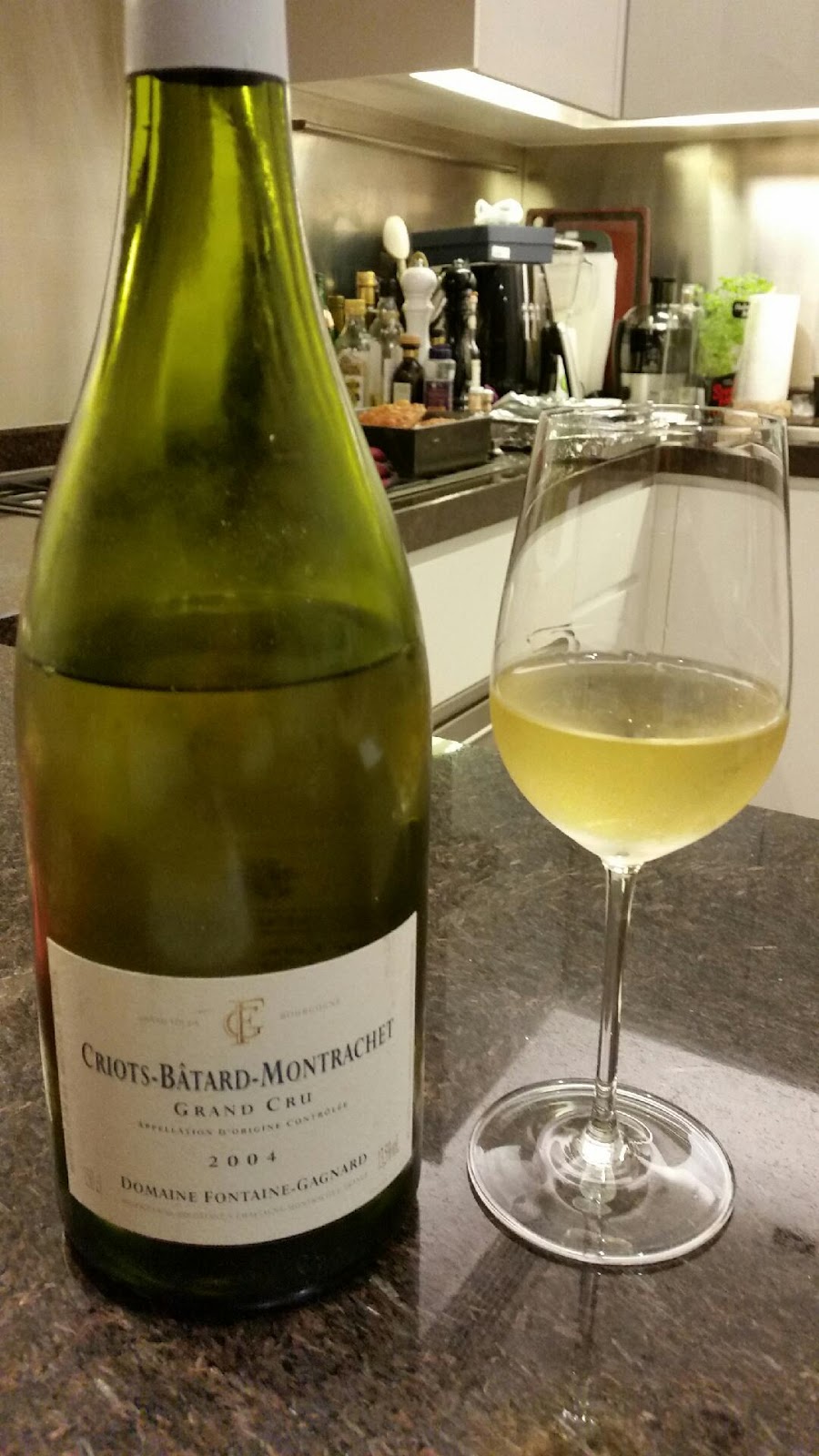
2004 Fontaine-Gagnard, Criots-Batard-Montrachet (magnum): Pale golden robe. Nuances of cardamom, roasted hazelnut, vanilla, shortbread, ginger, with ripe baked apple and tinned pineapple. Lively but not crisp acidity. Mouthfilling texture. Long finish.  This paired very well with the slight spiciness of the starter of 口水鸡!  16/20  


1989 Armand Rousseau Gevrey-Chambertin Clos St Jacques (magnum): Garnet robe. Notes of sous-bois, mushroom, slightly acetic. Silky texture, freshness from acetic was uplifting and did not detract from the enjoyment. An elegant 'old boot'.  For me, I would have preferred this a few years ago. 16.5/20

1990 Armand Rousseau Gevrey-Chambertin Clos St Jacques (magnum): Ruby-garnet. A complete change from the 1989.  Rich, velvety texture, supported by bright acidity. Gorgeously matured, still with plum, mushroom, and spicy notes, very long finish. Drink now and over next 4 - 5 years if well cellared.  We opened a 750 ml format after this and I found that had a drying finish and the fruit was lacking. 18/20  


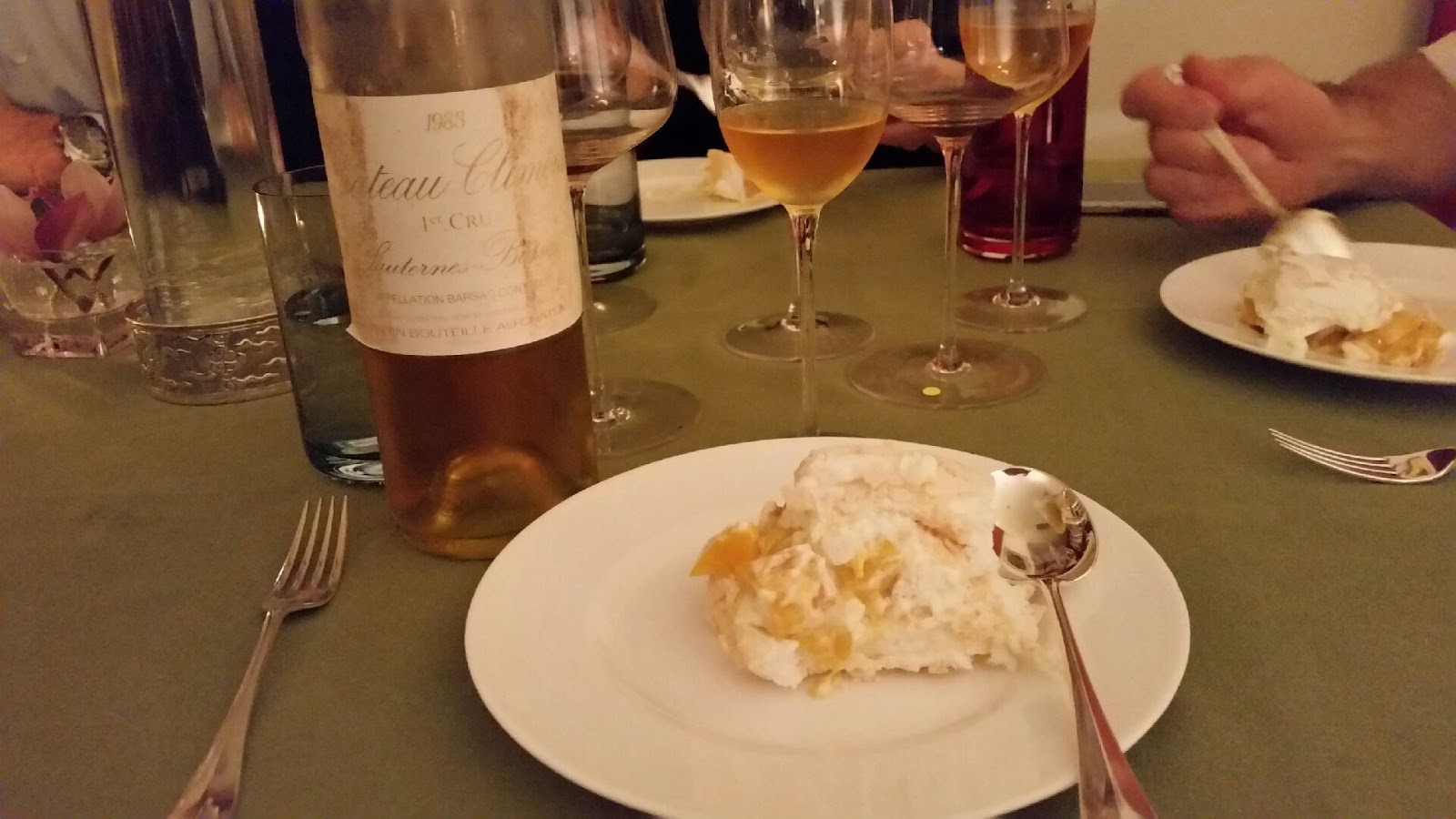
1983 Climens: Beautiful Barsac, classic and persistent.  Mango, marmalade, rye, honey, apricot. The opulence balanced by bright acidity. Layers of complexity. Long balanced finish. Rather impressive.  18/20  (And it paired beautifully with Cecile's mango meringue roulade!)

Saturday, 5 March 2016

1989 vs 1990 Haut Brion


27 February: On the occasion of some merchant friends visiting from the UK, we hosted a simple supper with a few magnums to round off an already very indulgent week with 2 meals by 2-Michelin starred chef Jean-Luc Rocha of Cordeillan-Bages, paired with some lovely Lynch-Bages vintages, including the lithe and delicately-framed 2001 and 1996, an under-rated vintage but performed extremely well at dinner with the characters and fleshy tannins of mature Pauillac (tobacco, pencil shavings and just a hint of cedar) and no signs of drying out.

For our simple home cooking, we started off with 1996 Pol Roger, Chardonnay Brut, Extra Cuvée de Réserve, Chardonnay Brut. It showed beautiful balance and poise, with mature notes of ripe pear and rounded mouthfeel, delineated with minerality throughout the palate.  Persistent mousse and long finish.  Wine of the evening for Richard.

1996 Chevalier-Montrachet, Leflaive (magnum). Pale gold robe. Gorgeous bouquet of ginger spice and nuts. Initially, racy and tight mid-palate, with great poise.  The mid-palate somewhat fell away for me just over an hour after opening, and the finish tended towards the shortish end.  It didn't retain the same lift and excitement that it showed initially.  Still a fabulous drop and it's our last magnum! (17/20)

We paired this with the peaty smoked salmon from the Hebridean Smokehouse (http://www.hebrideansmokehouse.com/) (and thank you Paul!).  It's very addictive if you like the peaty nuance. One pack was enough to last 2 dinner parties!  I served it with Laphroig 18 years last time - divine!

1949 Clos-Vougeot, Château de La Tour. Our guests brought this to share with us (and we duly raised a glass to Joe for its provenance!).  Elegant, silky texture.  Nuances of mushroom and earth.  Slightly acetic on the nose and aftertaste for me (I think other fellow guests found the acetic acid enhanced their enjoyment).  Still showing very well for its age.  A fine well-aged Bourgogne. I would have preferred it a few years ago.(16/20)

1989 Haut Brion (magnum). A classic claret, with hallmark nuances of graphite, tobacco leaf, cedar, cigar box and a hint of herbal (mint-like)/spicy note, layering the mid-weight palate.  Not an opulent wine by any measure, rather it impresses by its balance, harmony, vibrancy and particular freshness in the magnum format, with an invigorating lift with every taste.  This showed more freshness than the 1990 and more acidity too.  Really delicious and no sign of slowing down.  Will continue to mature for the next 15 - 20 years in this format.  For me, it was the wine of the evening, even though with its 100 RP points, at market rate of GBP 1,100 per bottle (750 ml) (Wine Searcher), it is almost 3 times the price of the 1990 Haut Brion.  Ouch! (20/20)

1990 Haut Brion (magnum).  A totally different style altogether.  As the 1989 was classic, the 1990 was hedonistic and boasted notes of chocolate, baked blackberry, cigar and liquorice, filling the layers in a rich and mouthfilling palate. For me, I preferred the 1989 for its poise, freshness, backbone, lift and persistence.  A gorgeous and irresistible wine for those who like this opulent style.  With just 2 RP points below the 1989, its market rate is GBP 400 per bottle (750 ml) - bargain??  The colour of the wine didn't have the same limpidity as the 1989 when I first opened it.  Should drink well for the next 8 - 12 years, in this format. (18/20)

1988 Doisy-Daëne.  It was a well-made Sauternes, showed balance and crisp acidity but lacked depth and character.  Quite one-dimensional in character. (15/20)

Large formats are simply perfect for dinner parties.......and we have a few more this weekend!  Our third Saturday dinner in a row!  

Saturday, 26 December 2015

Christmas Indulgence

25 December 2015: Our two bottles of Christmas indulgence:

Christmas Eve: 1990 Grands Echezeaux, DRC
Medium garnet hue. An immediately alluring bouquet of coffee and mushroom, infused with warm sweet spices. Almost sweet at entry, a rich concentration fills the palate, seamlessly integrated and impeccably balanced, leading to a wonderfully long finish, with just a hint of dryness towards the end. A magnificent drop for Christmas Eve! For me, perfect now...but will stay magnificent in a nice cellar for at least another 8 - 10 years.  19.5/20 


Christmas Day: 1970 Petrus
Intense bouquet of burnt caramel, fruitcake, chocolate, blackberry, kirsch, tobacco, herbs (sage and roasted thyme), entirely consistent with the Christmas theme. Layered and mouthcoating flavours, beautifully integrated tannins in an elegant structure. Drinking at peak now but should continue to age reliably for next 10+ years.  19/20


Not a great looking label! But into neck level.

A pre-Christmas feast with 1955 Veuve Clicquot and 1970 Vega Sicilia Unico


15 December 2015: A feast that served to celebrate a few milestones....a good friend joining the prestigious ranks of Masters of Wine, another good friend passing his 60th year (a bit earlier in the year), and a little pre-Christmas celebration for the rest of us.

We began with 1996 Krug Clos du Mesnil. It effused a rich and intense bouquet of ripe pear, Brazil nut, caramel, shortbread and buttered toast, laced with bright vibrant acidity, and a long rich finish. It seemed quite a bit more evolved than the 1998 we had recently. 18/20


The man and wine from same vintage!
1955 Veuve Clicquot: We were all a bit concerned when the cork came out with hardly a 'pop'! Gentle bubbles of such creamy texture slowly meandered their way through the glasses, carrying a most refined bouquet filled with hazelnut, smoke, toast, liquorice and ginger, that belied its age. Remarkable freshness filled the palate and left with a long complex finish. A perfect harmony, faultless with its notes. An almost ageless example of Champagne, like its same vintage personality who gave us the excuse to open such a great bottle. 19/20


2002 Chevalier-Montrachet La Cabotte, Bouchard (magnum): Apple, almond and citrus notes initially made up the bouquet, but it wasn't quite followed by the crisp, taut tension on the palate that we would expect for this wine. Saline finish, though lacking in length and vibrancy, evidence of premature oxidation? A little bit disappointing. 16.5/20


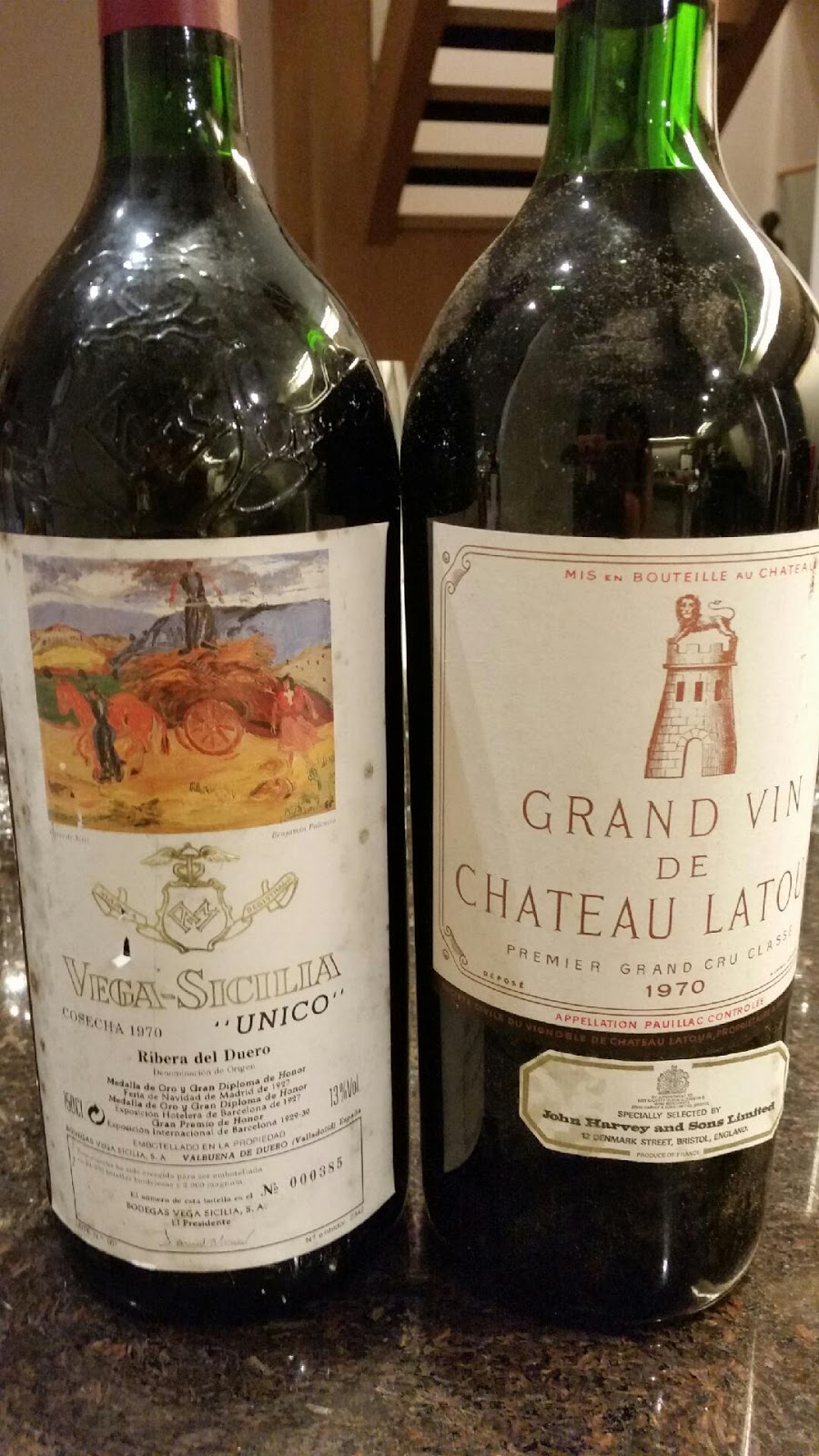
1970 Latour (magnum): Decanted for 1.5 hour before we tried it (there was no need to decant, except to facilitate the service, without getting sediments into our guests' glasses!) A garnet hue. Glorious bouquet of tobacco, cigar box, cedar, earth, still flaunting some fruity notes of blueberry. A classic claret that has reached the pinnacle of its enjoyment window, and possibly on the verge of its gradual decline (in magnum or larger formats). Drying sensation at finish. Drink now and over next 5 - 8 years (large formats). 17.5/20


1970 Vega Sicilia Unico (magnum): Decanted for 1.5 hour. Ruby hue, just showing some garnet at the rim. Plum, dark cherry, tobacco, fig leaf with chocolate notes, complemented with a remarkable freshness that kept up its youthful state. Perfectly retained structure, with a rich and luscious texture, leading to a finish that went on and on. A superb effort. Drink now and over next 12 - 15 years. 19/20


1954 Rivesaltes, Cazes: a rich enticing Christmassy bouquet of date, prune, walnut....with smooth silky texture....just seemed lacking in concentration and character when compared to the next wine!  But a beautifully aged Vin Doux Naturel from a tricky vintage, and perfect with the chocolate rum-raisin cake that I made, courtesy of Susan Jung's recipe posted in the SCMP. 16.5/20  


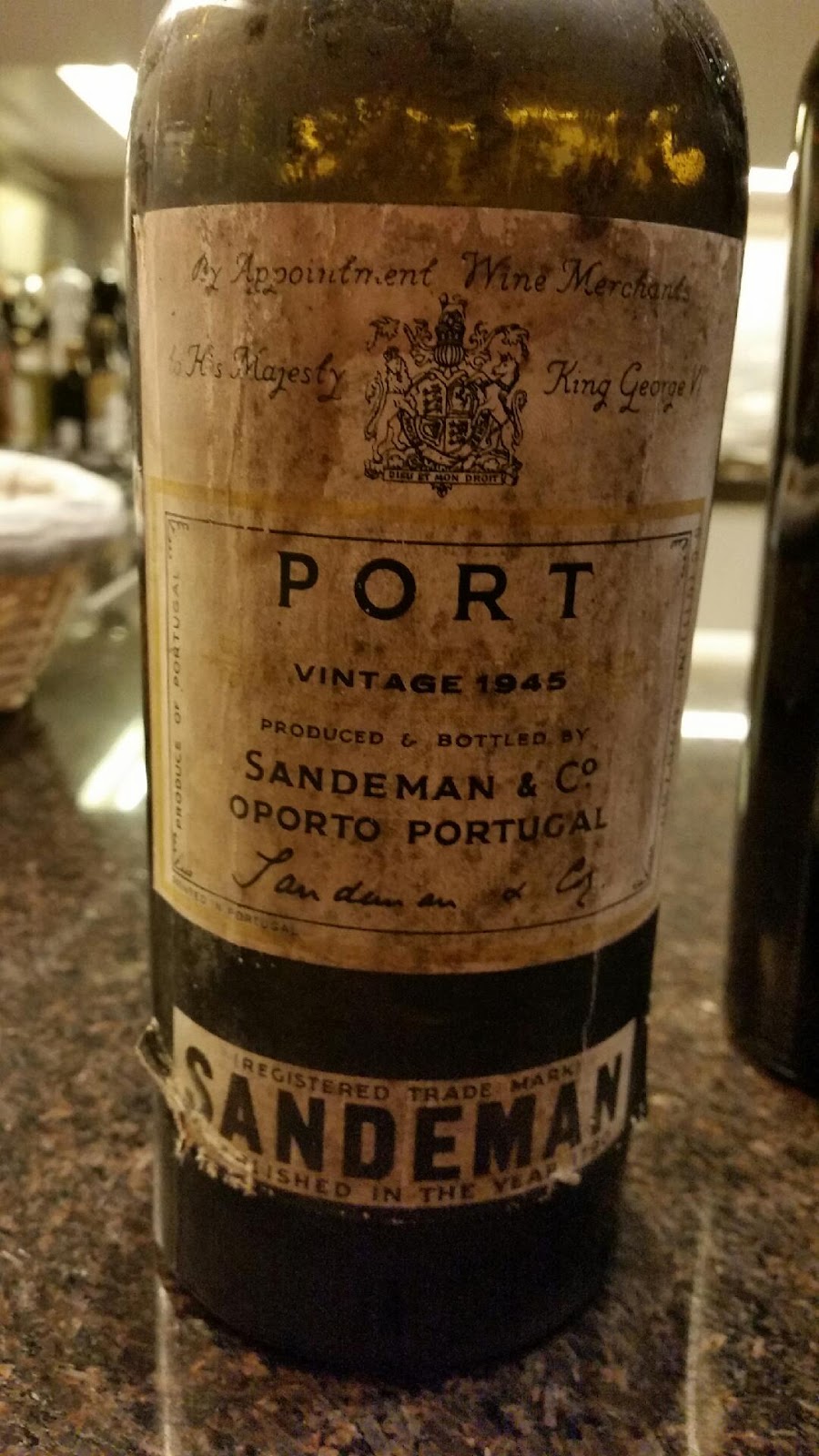
1945 Sandeman's Vintage Port: the spirity finish didn't detract from its slightly superior quality compared to the previous wine. Characterful, with dried fruit, nutty and caramel notes. Probably more enjoyable 10 years ago....now seemed rather lacking in fruit, the experience overcome by the alcoholic finish! 17/20

And just a few more days to Christmas!  

Monday, 30 November 2015

Nice Birthday Trio: Lafite, Mouton and Petrus, all from 1990 vintage

29 November 2015:


To celebrate a dear friend's birthday, we prepared 3 bottles of 1990 Bordeaux for our meal at Nur Restaurant (the restaurant normally only permits 2 bottles brought in from outside, but we were granted an extra bottle on this special occasion - thank you!).  We weren't sure if we were going to need 3 bottles, as two of our group were still a little under the weather (plus we had ordered a bottle of 2005 Thienot Cuvée Stanislas and a 2011 Leflaive Puligny-Montrachet Clavoillon from the wine list!).  So we first had the 1990 Lafite and Mouton which had been decanted for about 30 minutes plus the additional aeration in the glass!  The Mouton was much more subdued and showed more savoury tertiary character (much more evolved), and seemed more delicate. One of the dishes was a mushroom broth with Maitake mushroom.....it paired perfectly with the Mouton!  

Maitake mushroom, goji berries and mushroom broth

There was a very attractive fruit character that's still present in the Lafite, which showed a firmer structure than the Mouton. With silky tannins and a remarkable freshness, the wine showed a very harmonious presentation and a gorgeous bouquet of graphite, cedar and tobacco. There was a very admirable level of energy.   I loved it with the barbecued goose course.

Barbecued goose, Tokyo turnip and myoga

With still 2 more savoury courses to go, we had almost reached the end of those 2 bottles. So we decided to open the Petrus as well.  The Petrus was a bit muted at the beginning, and with aeration, it revealed a powerful character, with rich nuances and a voluptuous frame of ripe firm tannins just beginning to become integrated, befitting of a great vintage....with almost a burnt-cream, stewed fruit like character, with notes of coffee, Black Forest cherry and sweet tobacco.  Much more youthful in its evolution than the other two wines, I feel that with 5 or more years, it would start flaunting its seductive powers to become a truly compelling wine.  So powerful that not even the chocolate dessert could diminish its lingering superior qualities!

But for this evening, I loved the Lafite...it was the wine of the evening for me.  It showed harmony and balance, and an exalted elegance that belied its powerful structure.  So hard to score....I would give both the Lafite and Petrus 19/20 with a 'plus' sign for the Petrus. For the Mouton, I would score it 17/20.  The Mouton would be the wine of the trio that would not win the long distance race - best enjoyed over next 8 - 10 years in 750 ml format, while the Petrus would have at least 25 - 30 years ahead and the Lafite somewhere in the middle!

And the food, we're once again convinced that it's one of our top 3 restaurants in HK!  Each course was so thoughtfully created and artistically executed, with the contrasts and pairings of flavours and textures perfectly calculated.  We were as excited about the last course as we were about the first!

An irresistible platter of delightful amuse-bouches

An interesting tasting of 3 Cabernets

7 Nov 2015: We compared 3 Cabernet-Sauvignon dominated wines from 3 different countries. They were 1995 Leeuwin Estate Cabernet Sauvignon (Export Lot 98), 1993 Maya, Dalla Valle, 1990 Gruaud Larose.


1995 Leeuwin Estate, Margaret River: 75% Cabernet Sauvignon, with the balance made up of Merlot and Malbec. 14% abv.  
Intense blackberry, black cherry notes, with sweet tobacco (cigar) and bacon notes.  Gradually some minty character emerged, with aeration.  Balanced acidity, mellow but still firm tannin, vibrant palate, a very elegant long finish.  Still plenty of energy. 

1993 Maya, Dalla Valle, Napa Valley: 55% Cabernet Sauvignon, 45% Cabernet Franc.  13.5% abv.
Initial bouquet was spicy with notes of cinnamon and cardamom, dark cherry and blueberry notes, with sweet plum and kirsch, hot pebbles, almost port-like.  Soft chewy tannin.  With aeration, medicinal, herbaceous notes emerged. Slight disharmonious burning alcohol finish.

1990 Gruaud Larose, Saint Julien, Bordeaux: 63% Cabernet Sauvignon, 25% Merlot, 9% Cabernet Franc, 3% Petit Verdot. 12.5% abv. 20 months maturation in oak.
Quintessential aged claret nose of cedar, smokey cigar box, sweet spice, vanilla.  Almost sweet on entry, with mellow tannin, balanced and complex finish, just lacking in energy.

All were tasted blind and it was interesting that most of us voted for the 1995 Leeuwin Estate! 

Monday, 28 September 2015

Birthday Wines

27 September 2015: This month, we were invited to a couple of important birthday celebrations.....and here are the wines our hosts served - I made a note against the ones I particularly enjoyed:

40th birthday party at Dine Art:
1996 Salon ***
2004 Meursault-Perrieres, Roulot ****
2001 Batard-Montrachet, Ramonet
2002 Griotte-Chambertin, Fourrier *****
1999 Romanee-Saint-Vivant, Sylvain Cathiard
1999 Grands-Echezeaux, Rene Engel


60th birthday party at Nicholini's:
2000 Krug Clos du Mesnil *****
2007 Bienvenues-Batard-Montrachet, Henri Boillot
2004 Bienvenues-Batard-Montrachet, Leflaive ****
2008 Meursault-Caillerets, Coche-Dury *****
2001 Clos de Vougeot, Leroy ****
1988 Lafite-Rothschild ****
1989 Lafite-Rothschild

What treats we had!

Tuesday, 18 August 2015

1961 Lafite: perfect with roast chicken on a Monday evening

17 August 2015: Monday, mid August. A simple supper at home with roast chicken......and a bottle of 1961 Lafite Rothschild, to share with a dear friend, in advance of his birthday celebrations later this month! An excellent birth year - this bottle delivered classic and elegant claret qualities, with tertiary character of cigar box and leather, but lacking the body, generous fruit and texture and power of more illustrious 1961s, notably Latour. Despite the variations associated with this wine, this bottle came from very good stock and the level was into neck. In any case, drinking now and soon is recommended!

Sunday, 5 July 2015

1983 Margaux and 1985 Margaux


4 July 2015: The 4th July had given us non-US citizens a chance to get together to share 2 glorious magnums: 1983 and 1985 Margaux (amidst others).  We started with 2005 Cristal in magnum: subtle tension married with richness, with layers of aromatic complexity of citrus, apple, with toast and brioche notes, and a vibrant freshness.  Balanced, with plenty of signature finesse, very approachable and seductive to the palate. Finishes very long. Very difficult to stop sipping this wine.  The magnum disappeared rather rapidly!  This is drinking beautifully now (even from a magnum)!  55% Pinot Noir and 45% Chardonnay, all selected from Grand Cru plots, with 20% of the wine aged in oak barrels, with regular batonnage and no malolactic fermentation. 17.5/20

We then moved onto a 2002 Chassagne-Montrachet Les Chenevottes, Jean-Noël Gagnard.  Vivid acidity presenting aromatics of almond, citrus, pear and lime blossom.  Bright and clear on first approach.  Well-delineated, nicely detailed, but lacking in mid-palate intensity or persistence. A wine perfect now, with no benefit from further cellaring. 16/20

1985 Château Margaux (magnum): Clear, limpid. Alluring bouquet of cedar, cigar box, warm pebbles, blueberry and cardamon spice.  Silky texture, showing off the beautiful fruit, seamlessly integrated with the lively acidity, giving a great lift to the palate.  Suave and sensual, a wine in a very attractive harmonious state, simply perfect! I loved the way it finished. Clean, fresh and long.  18/20

1983 Château Margaux (magnum): Not limpid - rather murky. On the nose, there is an almost stewed blue/black fruit character alongside some Bovril, mushroom and gamey character.  The palate reveals an opulence and density from the very ripe fruit.  Velvety and full-bodied, does not quite have the same lift as the 1985.  I sensed just a hint of volatile acidity in this bottle, but it did not detract from the richness, concentration or intensity of this vintage for Château Margaux - a monumental wine that could take more cellaring time to unravel for a clean bottle.  18+/20

1975 Château Pétrus: One of our friends had very generously brought this.  A more rustic and subdued style.  Beautiful nose of mocha, with just some sappy and balsamic notes.  A wine at full maturity now and showing some dryness at the finish.  This bottle did not seem to have the promise of a very long life ahead but it certainly delivered the elegance of Pétrus, even in its more subdued state.  A fine drop, though rather hastily consumed by our group!  17/20

1988 Château d'Yquem: A magnificent Sauternes, showing its signature richness of palate and bouquet of marmalade, citrus, apricot and spice, lifted by an exhilarating acidity that was so seamlessly integrated, giving such incredible freshness and energy to the wine.  A glorious drop with a very persistent finish.  I made my glass last a very long time!  Drink now, with a very long life ahead!  19.5/20 (This was no shy company for the key lime pie/tart that Debra had made for us!)

1970 Graham's: Distinct with the maraschino cherries and spices character.  Full-bodied, fleshy, not very engaging initially, and rather spirity at the finish.  We didn't give this bottle the time for proper appreciation during the dinner.  17.5/20


Debra's key lime 'tart', as it had not been made in a pie dish!