Showing posts with label Italy. Show all posts

Wednesday, 2 January 2019

Feasting on Italian Wines and Cheeses

2 January 2019:

Happy New Year!

Continuing with my recent love affair with Italian wines, I decided to dedicate a drinks party to Italian wines. So why not New Year’s Eve?! And to pair with the wines, I had ordered some fine Italian cheeses and cold cuts, including the very addictive truffle ham! More on the cheeses as you scroll down.

I tried to cover Italy from north to south as much as possible. The verdict is clear that Italy is a great producer of fine wines, with a tremendous diversity in styles that could suit different palates, thanks to the number of indigenous varieties, the range of soils and climates and local customs. I firmly believe the local food has a lot to do with the local wine styles.

Amongst the whites, the Timorasso Derthona by Massa probably won the all-round applause from the tasters, delivering a point of difference in terms of flavours and texture. A beautiful food wine showing honey and almond notes at this age and a smooth texture. Suavia's Monte Carbonare was an interesting showing of Garganega, with just a hint of residual off-dryness at the finish. All classic wine drinkers gravitated towards Frescobaldi's Pomino Benefizio in the familiar Chardonnay territory. The Argiolas Vermentino di Sardegna showed lovely herbal notes but the alcohol was a little on the high side.


As for the reds, all the 1997 bottles delivered great finesse, especially Robeto Voerzio's Barolo Brunate, the Tignanello (in magnum) showed class and harmony and the velvety texture of the Pelago (also in magnum) belies a surge of vivacity and strength that could see the wine through another decade or more. The San Leonardo was my quiet ‘Italian’ – it gathered expressiveness with time and could easily be my favourite wine of the evening. The Quintarelli Valpolicella was a quirky one to like but still found a number of admirers. The Poggio Antico Brunello Altera was a firm favourite amongst those seeking power, strength and vivacity. It was luscious and beautifully balanced at the same time. The Graci Etna Rosso was no shrinking violet and impressed all by its freshness and purity of 100% Nerello Mascalese and lack of oak treatment. The Taurasi by Terredora di Paolo was beautifully made and drinking perfectly at this age, still showing some violet character, but with some tertiary characters kicking in. (Full wine list at end of blog)


Now coming onto the cheeses, they were all amazing! Let’s start with the ones we might know a bit better.

 
From bottom left: Taleggio DOP, Beppino Occelli Cusie al Malto d'Orzo e Whisky, Castelmagno DOP Stagionato 3 mesi, Pecorino Riserva del Fondatore, Il Fiorino, Parmigiano Reggiano DOP 36 mesi, Gorgonzola Dolce DOP al Cucchiaio.


Taleggio DOP: This is a raw cow milk cheese produced on the mountains of Val Taleggio, Lombardia. The fresh cheese is washed to give the cheese its characteristic orange rind (with an ivory springy paste) and sweet pungent aromas. It is made with unpasteurised milk, giving the cheese a high level of flavour complexity. The pungency is more pronounced on the nose than on the palate. The creamy texture suggests a buttery sweetness in the flavours, with a tanginess and floral character. It is a gorgeous cheese to be eaten on its own, paired with Timorasso, a Nebbiolo d’Alba or a 1997 Barolo Brunate!, or melted in cooking.

The Gorgonzola Dolce DOP al Cucchiaio was absolutely heavenly. This cow milk blue cheese from Lombardia/Piemonte was rich and luxuriant. Once settled into room temperature, the creamy texture with just the delicate blue mould character simply blended into one buttery herbal dollop coating the palate with its deliciousness. I did not try this with any wine, but I could imagine a dessert wine or a Demi-Sec Champagne if you can get hold of one!

Known as the King of Piemonte cheeses, Castelmagno DOP is a cheese with a long history and a monastic origin owing the name to San Magno. Records from 1277 showed that rental of pastureland was settled with wheels of Castelmagno. In the 18th Century, it was regularly served in famous restaurants in Paris and London. Typically made with cow’s milk, but sometimes can have goat or sheep milk added. This farmstead version has been aged for 3 months (Stagionato 3 mesi) and it shows a grey rind, with an ivory coloured paste that is firm and crumbly, with herbal, floral and mineral notes. There is a long aftertaste that reminds one of a damp cellar. I paired this with the Barolo and it was marriage made in heaven.

Even more impressive was the Pecorino Riserva del Fondatore by Caseificio Il Fiorino. This award-winning Tuscan Pecorino was simply divine. It had strong and intense flavours of pineapple, grassy and herbal notes, with a persistent finish. This is a very balanced cheese, with a velvety richness that just made it so much more special. I thought the Brunello was superb with this!

The Parmigiano Reggiano DOP Stravecchio (36 months) was divinely paired with the vintage champagne. It tasted better with the 2007 Taittinger Comtes de Champagne than the drier, more mineral and chalky 2002 Jacquesson Dizy-Corne Bautray (in magnum). This cheese from Emilia-Romagna needs no introduction. This version from Agricola Giansanti di Muzio was exceptional, so packed with flavours, velvety smooth and yet nutty and spicy and the saltiness was so well integrated.

The pièce de résistance was the Beppino Occelli Cusie al Malto d’Orzo e Whisky. This nutty and piquant cheese had this most interesting appearance of a barley studded rind, and a firm but easily crumbled paste, the colour of milk coffee. Cusie is a Piemontese expression for “that which there is”. So the Cusie is usually made with whatever milk available at the time of production. However, typically it would start with milk from Alpine cows, mixed with either goat or sheep milk. This version was coated in whisky-soaked barley and aged for around 18-24 months, giving the cheese a smokey and sweet fermented taste infused with malt whisky flavours, such as fermented grains, caramel, dried fruit and marmalade. The aftertaste is distinctly spicy with a good lift of acidity. This is a gourmet cheese. I did not think it would do it justice to pair with wine. Rather a single malt with age?

This is a very exciting journey discovering Italian wines and cheeses. So glad to be on board! Salute!


Here are the wines that featured on this Italian evening:

The White Wines

Timorasso 'Derthona', Colli Tortonesi DOC, Vigneti Massa, 2014

(Timorasso, Piemonte)

Monte Carbonare, Soave Classico DOC, Suavia, 2015

(Garganega, Veneto)

Pomino Benefizio DOC, Castello di Pomino, Frescobaldi, 2014

(Chardonnay, Toscana)

IS Argiolas, Vermentino di Sardegna DOC, Argiolas, 2017

(Vermentino, Sardegna)


The Red Wines

Barolo DOCG Brunate, La Morra, Roberto Voerzio, 1997

(Nebbiolo, Piemonte)

San Leonardo, Vigneti delle Dolomiti IGT, Tenuta San Leonardo, 2004

(Approx Cabernet Sauvignon(60%)-Carmenère(30%)-Merlot(10%), Trentino)

Valpolicella Classico Superiore DOC, Quintarelli, 2003

(Corvina-Rondinella-Molinara-Others, Veneto)

Tignanello, Toscana IGT, 1997 (magnum)

(Sangiovese(85%)-Cabernet Sauvignon(10%)-Cabernet Franc(5%), Toscana)

Brunello di Montalcino DOCG, Altero, Poggio Antico, 2007

(Sangiovese, Toscana)

Pelago, Marche Rosso IGT, Umani Ronchi, 1997 (magnum)

(Montepulciano (50%)-Cabernet Sauvignon(40%)-Merlot(10%), Marche)

Taurasi DOCG, Terredora di Paolo, 2007

(Aglianico, Campania)

Etna Rosso DOC, Graci, 2016

(Nerello Mascalese, Sicilia)

Wednesday, 14 November 2018

Italian Diversity by Vinitaly International Academy


9 Nov 2018: To assign one hour for a seminar on the diversity of Italian grape varieties and wine styles was indeed a challenge for the speakers, Sarah Heller MW and Henry Davar, of the Vinitaly International Academy Faculty. With such tight schedule, the pair managed so gracefully to present to the curious audience six indigenous and lesser-known varieties amongst Italy's overwhelming number of indigenous varieties. Depending on who counted them, the number could be different. In the book "Wine Grapes" by J Robinson, J Harding and J Vouillamoz, the authors attributed 377 indigenous varieties to Italy out of a total of 1,368 from around the world (I guess if the authors were to include any more, this book would need to be presented in two volumes!) Anna Schneider, Italy's eminent ampelologist as quoted in "Native Wine Grapes of Italy" by I D'Agata, counted over 2,000 grape cultivars.  Whatever the number, it's impressively vast! Most of us would be lucky to have tasted 50 of Italy's indigenous varieties!


The seminar highlighted the biodiversity of Italian viticulture, citing the unique organoleptic qualities of Italy's grape varieties and how they have adapted over thousands of years to the local terroir. Although they express regional identity extremely, they do not travel so well, hence there are very few successful examples of Nebbiolo, Sangiovese and Aglianico (amongst others) grown in regions outside of the grapes' comfort zones in Italy, even less so in other wine regions around the world.


Apparently, the top 75% of Italian vineyards are grown with 80 varieties, whereas the top 90% of Italian wine production comes from just 30 varieties. In France, the top 90% of French wine is made from 15 varieties and in the US, only 9 varieties. Just think about that for one moment.


We tasted 3 white wines and 3 red wines at this seminar.


Verdicchio: La Staffa, Verdicchio dei Castelli di Jesi DOC Classico Superiore 2017According to our speakers, the indigenous grape variety from Le Marche, Verdicchio, is usually a cheerful wine to accompany seafood. However, this superior version by La Staffa is vinified in casks of acacia and cement, aged on fine lees for a few months. Bright freshness and complexity of flint, herbal (fennel), green apple, citrus, with some notes of yeast. Crisp finish that lingers, a beautiful expression of Verdicchio from this coastal region. Our readers reminded the participants that there is also another version of Verdicchio from inland where it enjoys bigger diurnal ranges, resulting in fleshier and riper fruit wines: Verdicchio di Matelica DOC.


Fiano: Ciro Picariello, Fiano di Avellino DOCGFiano is a thick-skinned variety from Campania. Its natural high acidity allows it to ripen well, given its late ripening tendency. This wine is made from grapes from two parcels, one parcel at Summonte (650 metres above sea level) and the other Montefredane (around 500 metres). Vinified in stainless steel, and aged on fine lees for about 10 months. Bottled with minimal sulphur, with no fining or filtration. This wine shows its typical character of almond, citrus and a delicate fruit character, almost star fruit-like. There is also an underlying mineral/flint character. Fiano has a great ageing ability - this wine can be cellared for a further 8 - 10 years, with very interesting evolution.


Timorasso: Vigneti Massa, Timorasso Derthona, 2016
Contrary to the last grape variety, Timorasso, a native of Piemonte, which was almost abandoned for 'dead', and was revived by Walter Massa, has much thinner skin. Therefore, skin contact is essential to help the skin release its aromatic compounds and a phenolic quality to the wine. To make this wine, the grapes typically undergo skin contact of 48-60 hours before fermentation. There is an unmistakable apricot, orange blossom and honey tone to the aromatic complexity.  With age, petrol-like character can develop, according to the speakers. The acidity is vibrant, that balances well the fleshy body.  It is a textural wine, but beautifully balanced. This wine is almost too young to enjoy properly at the moment.  Another 1 - 2 years will see it unfurling its potential to charm the palate.  Definitely a food wine!


Nerello Mascalesse + Nerello Cappuccio: Girolamo Russo, Etna Rosso 
Nerello Mascalese, the high-toned indigenous variety of Sicily has always been compared to Pinot Noir or Nebbiolo for its delicate red fruit and linear structure. It makes a perfect couple with its cousin Nerello Cappuccio in this almost "Burgundian-like" Sicilian red wine. This is typically a blend of 94% Nerello Mascalese and 6% Nerello Cappuccio, vineyards grown on ancient lava flows with varying age, mineral content and topsoil composition, giving the wine much complexity.  The wine is made with indigenous yeast, with no temperature control during fermentation.  No fining or filtration before bottling.  This wine exudes red fruit and rose-like aromatics (strawberry and raspberry) and a minerality underlines its core, soft tannins still showing some youthful astringency. This is an attractive wine and it is only the entry level for this former pianist turned winemaker!


Dolcetto: Cigliuti Dolcetto d'Alba 2016
The Cigliuti family has been living in this Piemontese region since the 18th Century.  Renato Cigliuti was the first member of the family to begin bottling his own wine in 1964.  Their vineyards are planted on the Serraboella hill, looking over Neive from the east. Their signature wine is Barbaresco but they also have the Dolcetto grapes planted in this Barbaresco region.  There is a nice taut astringency to this youthful expression of Dolcetto, but the tannins are beautifully managed.  Violet, plum, mulberry with cherry fruit completes the aromatics for this generous and charming wine, designed to be drunk early, within the next 12-18 months. A great lunch wine with good friends. 


Sagrantino: Arnaldo Caprai, Sagrantino di Montefalco Collepiano DOCG 2010
Sagrantino from Puglia is probably the most tannic red grape variety of Italy.  Arnaldo Caprai has invested a lot of time, energy and resources into the research of this indigenous variety to tame its tannins and to showcase its inner charm. This wine was aged in French oak barriques for around 22 months, with six more months in bottle before release.  This 2010 version has started to show some tertiary character, dusty and savoury notes, with ground coffee, mocha, dried flowers, some notes of vanilla "creme brulee" rounding off the finish.  This is a broad-shouldered wine, that has had its tannin structure tamed by age, now showing a firm but elegant presentation, with soft acidity just gliding off the palate.


This seminar was like taking a peep inside Italy's vinous treasure trove, but it was a very well-structured and educational introduction to Italy's diversity.  I believe it has left us all wanting to learn more about Italy's rich wine heritage. Our speakers on behalf of VIA extended a warm welcome to the audience to join its growing family of Italian wine ambassadors and experts!

Monday, 12 November 2018

The Majesty of Soldera: A Tasting of Five Vintages

10 Nov 2018: Widely acknowledged as a cult wine, Soldera (the wine) rarely features at wine tasting dinners. A conscious and defiant decision in 2012 to become an outcast of the Consorzio del Vino Brunello di Montalcino by bottling his 2006 vintage wines as Toscana IGT has no doubt elevated the cult status of the wine and the celebrity image of its owner, Gianfranco Soldera, whose genius and temperament divides opinion.


But Gianfranco was already an outsider before he even started. A native of Veneto and a former insurance broker working in Milan, he was determined to make the highest quality wine in this prestigious region. He purchased the 23-hectare estate of Case Basse located in Tavernelle, southwest of Montalcino, Tuscany, in July 1972. Located at an altitude of 320 metres, the Soldera property is adjacent to Gaja’s estate Pieve Santa Restituta which was purchased by Angelo Gaja in 1994. The area has long been recognised as an ideal region for Sangiovese. Kerin O’Keefe particularly noted the advantageous microclimate of this region in her book, "Brunello di Montalcino: Understanding and Appreciating One of Italy's Great Wines". She wrote “Averaging between 300 and 350m above sea level, fresh nocturnal breezes cool down hot daytime temperatures during the growing season, generating aromas and complexity. The vineyards are also elevated far enough above damaging spring and autumn frost and fog, but when compared to higher areas are just low enough to enjoy warmer temperatures that guarantee more consistent ripening. In fact, most producers in this area feel they have the best of everything: perfect altitude combined with complex and predominantly rocky, well-draining soils as well as warmer temperatures.”


Vines were planted between 1972 and 1973 at Case Basse and the slightly lower altitude Intistieti. The soils are low in fertility, well-draining, allowing the roots to access depths of around 10 metres. Only around 10 hectares are planted with vines to ensure that all the vines receive the best possible natural vinegrowing and winemaking from vineyard to cellar. After fermentation with native yeasts, the wine is aged in large (50-85hl) Slavonian oak casks for an extended period (typically between 48 and 70 months, much longer than the 2 years oak-ageing requirement by the Consorzio) in the underground cellar built of natural materials 14 metres below ground maintaining consistent temperature of 13°C and humidity of 85%. The wine receives minimum intervention with racking being the only intervention. No pressing, fining or filtration, and only minimal sulphites are added. Gianfranco and Graziella Soldera believe in respect for the soil and the biodiversity and sustainability of the environment to nurture healthy vines. At Case Basse the vineyards are planted in a complex ecosystem, made up of a wide variety of other plants, animals and insects. The botanical garden created by Graziella is widely acclaimed to be of extraordinary beauty.


The first vintage of the Soldera Brunello was 1977, commercialised in 1982. Soldera also produced a Brunello di Montalcino Riserva in the best vintages, until 2006. In 2008, a group of prominent producers were accused of blending other grape varieties to make Brunello, which by law should be a 100% Sangiovese wine. This became known as the Brunellogate. As a defiant gesture to protest against the Consorzio, Soldera decided to bottle his wines as Toscana IGT Soldera 100% Sangiovese dall’Azienda Agricola Case Basse® from the 2006 vintage (commercialised in 2012), as a message that the winery’s name was sufficient guarantee of quality.


Approximately 600 hectolitres or the equivalent of 85,000 bottles of wine from the vintages between 2007 and 2012 ended up on the floors of Soldera’s cantina in December 2012 as a result of an act of vandalism committed by a disgruntled employee who opened the valves of 10 casks of wine and drained these casks. The 2010 vintage suffered the most. Only 450 litres were left of the 2010 vintage. As a result, Gianfranco decided to only bottle the 2010 vintage in large formats (3,5, 6, 9, 12 and 15 litres) to be sold at specifically held auctions in aid of sick and poor children. Prices for Soldera wines (particularly for these vintages) skyrocketed as a result. (To illustrate, according to wine-searcher.com, a bottle of 2013 Soldera would cost around US$435, cf Gaja Pieve Santa Restituta 'Sugarille' at around US$ 135 a bottle or 2013 Castello Banfi Poggio alle Mura Brunello di Montalcino DOCG at around US$55 a bottle.  But price for wine is such a subjective measure!  These prices are for illustration only.)


Our very special wine dinner featured Soldera wines from the vintages 2006 to 2012, with the noticeable absence of the 2010 vintage, for the reason explained above. And to make it more special, we paired with Chinese dishes!


We started with a magnificent magnum of 1996 Pol Roger Extra Cuvée de Réserve. A beautifully aged champagne, with layers upon layers of umami and sweet spicy nuances, revealing notes of field mushroom, toast, honey, nougat, pear compote, marzipan and hint of candied ginger. The creamy mousse caresses the palate and leaves with a persistent finish. Glorious champagne, gracefully mature and deftly balanced. At a most harmonious place now! 19/20


The next wine was 2011 Meursault Clos des Bouchères, Roulot. I paired this wine with a curry-flavoured crab meat baked in its shell. This bottle showed much more ripe/bruised fruit than the bottle of village Meursault of the same vintage by Roulot that we opened earlier in the week. There is a moderated freshness despite the rounded texture of the wine, showing notes of hazelnut, cardamom, curry and honey. Overall, it lacks energy and seems much more evolved. But the coincidentally perfect pairing with the curry-flavoured crab meat was serendipity! Based on this bottle, drink now! 16.5/20


2006 Soldera: The earlier reductive note slowly dissipated with aeration in the glass. This is a wine of immense proportions that have now settled into a beautiful harmonious vinous state, showing velvety texture of well-honed freshness and supple tannins. Complementing the fruity notes of kirsch, dark plums and damask rose, are savoury and spicy notes of bacon, tar, cigar tobacco and liquorice. It is sensual and seductive, intense and persistent. Drink now and over next 10-15+years. 18.5/20


2007 Soldera: Here we find more herbal (tea leaves and mint) and dusty notes amidst the vibrant fruity notes of cherry, pomegranate and cranberry. The tannins were more delicate here but well-integrated into a silky texture. This made a strident contrast with the 2006. There was a ballerina elegance, aromatic purity and subtlety that transcended the appreciation of the wine. Drink now and over next 8-10+ years. 18/20


2008 Soldera: This demonstrates a return to the 2006 style. At this stage, it shows a hefty structure with a concentration of supple tannins, ripe and intense fruit flavours of dark cherries and plums, overlaid with savoury and wild herb notes. A distinct minerality fills the core of the wine, throughout the palate, that belies its bold and opulent first impression. This is a wine for the very long haul. Drink now and over next 15-20+ years. 19/20


2009 Soldera: Despite the warm vintage, there is a vibrancy and fruit purity that seems at odds with the vintage characteristics. The redcurrant and cherry fruit is ripe and succulent, but not overripe. Herbal and savoury notes adorn the layers, adding tea leaves, heather, violet and an exotic mocha nuance to the wine. This wine has an energy, purity, precision and finesse that makes it so enigmatic. Drink now and over next 10-15+ years. 18.5/20


2011 Soldera: A plethora of aromas and flavours leap out of this beauty. Red plums, kirsch, black cherries, blackberry, damask rose, tea leaves, wild herbs, sweet earth and liquorice are the immediate characters as the wine continues to evolve in the glass. Everything is in perfect proportion here giving a very harmonious picture of beauty and gratification. Underlying it all is a masterly crafted precision and balance that is so well managed in this warm vintage. This wine kisses the palate and leaves with a persistent aftertaste. Not quite in the same style as the 2006 and 2008 but I find a much more harmonious equilibrium here without losing the Soldera qualities. Drink now and over next 15-20+ years. 19/20


2012 Soldera:
very sadly this met the fate of cork taint!


I thought it would be hard to ask everyone to come up with his/her top wine, but trying to come up with two top wines seemed equally challenging! In the end, 2006 and 2011 received the most votes, with 2008 closely following.  Were they Burgundian in style?  I would say they have their own unique elegance, finesse and harmony.  They are creations of passion and respect, crafted in this particular piece of Tuscany with its distinct terroir and ecosystem. 


Not having tasted these wines before, it was difficult to try and pair dishes exactly with each vintage.  So I put together a menu with a selection of dishes that could possibly work with most of the wines. The pan-fried Angus beef with garlic was a China Club signature dish that went particularly well with the 2006 and 2008 Soldera.  I thought there was a nice complement between the pork and lotus root patties and the 2007 Soldera. The chicken baked in rock salt was simply too succulent and delicious to complicate it with any wine!!!  The stir-fried string beans with minced pork and fermented beans did a nice job with the 2009 vintage, but equally it could have worked with the pork patties.  The stir-fried flat noodles with beef in satay sauce was an inspired choice to finish with - for me, it worked rather well with the 2011 vintage too!


Memory of this dinner and the superlative wines will stay with us for a long time!  And I have to thank The China Club for a fabulous job with the food and wine service! 

Thursday, 9 July 2015

Baglio Oro's unique touch of wood

Tasting of Baglio Oro wines at Divino Bar

19 June 2015: I met Giuseppe Laudicina from the family-owned winery of Baglio Oro in Marsala, Sicily. Baglio Oro was founded by Don Pino and is now run by both Cottone and Laudicina families. The new generation converted part of the old winery into a modern winemaking facility and their first release was 2009. They make single varietal wines such as Grillo, Inzolia, Grecanico, Catarratto, Nero d' Avola and Syrah, as well as wines for modern palate from the international varieties of Cabernet Sauvignon and Merlot, as well as Yema (late-harvest Grillo)- pleasantly sweet (about 80 g/l RS), balanced, with good dose of acidity, perfect with lightly sweet dessert or mature cheese. Fermentation stopped at 14 degrees Celsius to retain a small amount of sugar.


Nero d' Avola

At the beginning when the family started to make red wine, they did not use any oak to preserve the purity of the fruit. For the 2012 harvest, they decided to improve the flavour profile of the wine and its texture. They decided to use some oak, but very sparingly. They approached the last remaining barrel artisan in Marsala, Li Causi, from Marsalabotti, to make them 16 hl barrrels, made with 50% cherry and 50% oak, to marry the soft touch from the cherry and the aromatic profile and structure of the oak. Initially aged in stainless steel, the wine then spends a very short time in oak, about 3 months before being aged in bottle.  The result is enhanced elegance and finesse, with velvety texture and a more intensified expression of the grape variety.  The short passage in oak is currently only applicable to their Nero d' Avola and Syrah, not for the Cabernet Sauvignon or Merlot.


Half cherry, half oak barrels

Saturday, 27 June 2015

6 stars in 2 days, and some very memorable bottles!

26 June 2015:
Quite by coincidence that we found ourselves dining in 2 of Hong Kong's top restaurants on consecutive evenings this week, each a holder of 3 Michelin stars, and entirely different in style and cuisine.


The beautiful stuffed crab shell - I have just made a dent in the middle to make way for the Lea & Perrin sauce!
The Lung King Heen roast chicken - half portion here.
Puntalette with minced beef in XO chili sauce

The first evening was at Lung King Heen, the temple of haute cuisine chinoise, in the Four Seasons Hotel.  We started with the famous crab shell stuffed with onion and fresh crab meat. This scored full marks for us: the balance between crab meat and onion was perfect, with intense flavours highlighting the freshness of the crab meat, with texture to give structure to the dish.  Sensational.  With just a light touch of Lea and Perrin sauce, this dish went beautifully with the 2001 Ramonet Montrachet.  The suckling pig dish was another highlight - I could not taste any fat at all - all I tasted was the crispy skin with tender succulent meat and a layer of fluffy rice-flour pancake.  I loved the wok-fried prawns with organic black garlic and dried chili, even though it might not have been the best match for the white wine.  The Lung King Heen roast chicken was a classic - beautifully roasted chicken, moist and tender, topped with wafer-thin skin so crispy and light, with such brilliance and hardly any fat underneath.  It was divine.  Our red wine was 1990 Clos de La Roche, Hubert Lignier.  Our wok-fried Australian beef tenderloin with spring onion, garlic and black pepper might have paired better with a spicy wine but both wine and food was so exceptional that it didn't matter so much.  Finally, a new dish that we had not tried before, fried puntalette with minced beef in XO chili sauce - an East meets West dish packed with bold flavours and al dente textures, tasty to the last grain!  I had to make room for this! 


2001 Montrachet, Ramonet
An utterly divine white Bourgogne, with incredible power, intensity, depth, density, structure and ageability.  Still very much in its youth. It's austere but the intensity of the flavours (floral and spicy) is mouthstaining, and the richness lifted by vibrant acidity.  The palate is shaped by the breadth of flavours and the strength of crystalline minerality from beginning to the very long finish.  A wine of immense dimensions, that will benefit from further years of cellaring.  Decades of life ahead in an ideal cellar.  19.5+/20

1990 Clos de La Roche, Hubert Lignier
A wine in its prime and totally deserving of superlative descriptions. Mouthcoating richness, full-bodied and velvety texture, with incredible length and depth. Layers of complexity include game, sous-bois, mushroom and nutmeg. Drink now, but the robust structure will endure 15 - 20+ years of cellaring. Classy and sensual. 19/20


To finish, Bernard Chan, the Senior Sommelier, introduced us to a gem in his wine list.  We had a glass of the 2009 Ambonnay Grand Cru Les Crayères, Champagne Marguet.  Only 2,459 bottles made.  62% Chardonnay and 38% Pinot Noir.  Zero dosage. 45 - 50 year old vines.  32 months aged on lees. Disgorged in March 2014.   Beautiful definition, great detail.  The material was so rich and ripe that dosage was not necessary at all.  Long finish.  This is available by the glass.  I hope he will still have stock of this the next time we visit!


Conversations with Bernard revealed his passion about his métier and wines.  He has managed to put his own stamp on the wine list, such as the Marguet champagne as well as a tasting flight of wines called "A Taste of Asia" consisting of 6 interesting wines and spirits, all made in Asia, and all chosen to go with the food at Lung King Heen. The current selection includes a white (Grace Vineyard Tasya's Reserve Chardonnay from China), a junmai daiginjo genshu from Japan, a 10-year-old Hua Diao (Chinese yellow wine), a Bordeaux blend from China (Château Bolongbao from outside of Beijing, tiny production), rice-based spirit from Korea (Hwayo 41 degrees) and a lychee honey dessert wine from Taiwan.  At HK$600 for a flight of 6, it almost seems a bargain compared to the very steep corkage charge!  At HK$ 750 corkage charge a bottle, this had to be the most expensive corkage charge in Hong Kong!  Still worth it I suppose, depending on the bottle you wanted to take.


Chateau Bolongbao from just outside of Beijing city

Hwayo Korean rice-based spirit

The following evening, we went to Otto e Mezzo by Chef Bombana.  We did not catch a glimpse of Chef Bombana but this had not affected the food quality at all.  All the dishes were perfectly executed.  The lobster salad with truffle was a definite hit and it went beautifully with the white wine that was recommended to us: a 2009 Quintodecimo Exulte Fiano di Avellino. For main course, I had a relatively simple dish but it was packed with flavours and utterly satisfying - the lamb and mushroom pappardelle.  The veal milanese was an all-time favourite. 


Lamb and mushroom pappardelle


2009 Quintodecimo Exultet Fiano di Avellino
A singular expression of Fiano di Avellino from a single cru vineyard at 570 metres altitude, on clay-calcareous soils in Lapio. Long pressing before fermentation, for which 70% in stainless steel tanks and 30% in small new French oak barrels. Ageing for 8 months on fine lees, with regular racking. Quintodecimo believes in biodiversity and that man, nature and vines must all be at one to produce great wines. The name Quintodecimo pays homage to the number 5: the vine's flower has 5 sepals, 5 petals, 5 stamens, and 5 nectars. The leaves are pentalobate, with 5 parts and 5 veins. We have 5 senses, etc.

This is extremely elegant, with tight minerality running through its backbone. Lightly aromatic, with acacia, herbal, honey and a core of yellow stone fruit. Harmoniously presented and finishes extremely long. 2009 vintage seems just perfect now but can easily be cellared for another 8 - 10+ years. This wine requires bottle age to deliver its potential and could appear a little austere if drunk in its early youth. (Thank you, Marco for recommending to us!) 17.5/20  

(I feel I must try the Greco di Tufo and Falanghina by Quintodecimo very soon while the Greco is still fresh in my memory!)

1986 Lafite
A rich wine that keeps evolving in our glasses over the course of our meal. Initially a little closed. With aeration in the glass, we are able to admire its fleshy richness, intensity and bold structure. A substantial wine with the hallmarks of monumental greatness, and one that can expect further bottle evolution, and a very long life ahead, 30+ years. Today, it could have benefitted from 2 hours of decanting time but it was fascinating to see how it kept evolving in the glass. 20/20

1996 Margaux
Fine and elegant, with its signature aromatics. Sinewy and delicate when compared to the fleshy and mouthcoating Lafite.  A delightful wine that should be enjoyed now and over the next 10 - 15+ years. I didn't find the wine showing marked improvement with aeration in the glass. 17.5/20


Sunday, 13 July 2014

2008 Milmanda and 2004 Giusto di Notri

12 Jul 2014:


2008 Milmanda, Torres: Lovely gold colour. Very expressive nose of apricot, pear and lemon, with notes of ginger and vanilla spice. Weighty and full-bodied, richness of texture and intensity of flavours coat the palate, nicely balanced by a reasonable dose of acidity but I would have preferred more for a neater finish. Beautifully integrated oak elements....a harmonious finish that leaves a long impression. A very well-made Chardonnay from a single vineyard at the foot of the castle walls of Milmanda castle in Conca de Barberà. (Fermented and aged in French oak barrels.)  15.5/20 (I bought this bottle in the Torres shop in Barcelona in 2011 - waited all this while to try it!)

2012 Chianti, Duomo, Vinoreale
A blend of Sangiovese and Canaiolo. Medium bodied, nice juicy fruit, balanced Chianti but not a memorable one. Acidity on the low side.....Short finish. Drink now. Better as an aperitif.  (We were given this bottle to try......I tried to look up more information from the website on the backlabel but could not find anything....)

2004 Giusto di Notri, Tua Rita
A blend of 60% Cabernet Sauvignon, 20% Merlot, 15% Cabernet Franc, 5% Petit Verdot. Cherry, kirsch, blackberries, plum, liquorice, hint of scorched earth. Opulently textured with very ripe material. A full bodied wine, fleshy but not lacking in elegance at all. Grippy tannin, finishes long and smooth.  Delicious now and over next 6 - 8 years. 16.5/20 (This wine held very well for our curry evening: beef rendang, egg sambal, chicken masala and minced pork and eggplant! )


Sunday, 22 September 2013

The 9 Crus of 2008 Produttori del Barbaresco


14 Sep 2013: It was really a great treat to be invited to a tasting of the 9 crus of the Produttori del Barbaresco, all from the 2008 vintage, over a nice long meal at Si Mangia, a private kitchen focusing on Italian cuisine, overseen by Chef Ben and his wife. 11 of us occupied a table at the centre of the dining area of Si Mangia (www.simangia.com.hk), with plenty of space to fit 9 glasses per person, our plates and even room to scribble down your tasting notes! A real luxury as far as wine dinners go in HK! Although the restaurant did not have so many glasses for us, our thoughtful hosts arranged for Lucaris to supply the excellent array of glasses. Again another indulgence!


Produttori del Barbaresco is a Cantine Sociale (co-operative) that started in 1958. From the 19 founding families of growers whose holdings included majority control of some of the best vineyards such as Ovello, Montestefano, Moccagatta and Pajè, the Produttori has now grown to a membership of 54 families controlling 110 hectares of vineyards (approximately 22% of the entire DOCG), adding other prime vineyards such as Rabajà, Asili and Montefico, etc. The Produttori respects traditional winemaking practices and today, although it uses stainless steel tanks for fermentation, the wines all go through lengthy maceration of 40 to 60 days, depending on style and vintage. The crus are all aged for 3 years in large old botti before bottling. Typical production volume is 35,000 cases per year, including 40% of cru bottlings, 40% of bottling as Barbaresco and the remaining 20% as Nebbiolo della Langhe. There are 9 crus altogether: Ovello, Pajè, Pora, Rio Sordo, Moccagatta (Muncagota), Montestefano, Montefico, Rabajà and Asili. Our hosts had organised these 9 crus into 3 flights for us to taste and appreciate:


Flight 1 - common trait of rich soils?
Pora
Rio Sordo
Asili


Flight 2 - very good aromatics?
Pajè
Ovello
Muncagota

Flight 3 - structure and ageability?
Rabajà
Montefico
Montestefano


Here are my brief notes:
Pora: Notes of blackberry, black cherry, minty herb, tar, earthy and liquorice. Quite fleshy but in a rustic manner. Firm ripe tannin. Lovely aromatics. Lacks the refinement of the other crus.

Rio Sordo: Also quite rustic in style, more red fruit here, savoury and sinewy in structure. Astringent finish.

Asili: Both red and black fruit here, floral (violet), with herbal notes. Intense, weighty and powerful, but extremely well balanced. Almost a nice sweetness on entry. Refined firm tannin. Finishes long, beautiful.

Pajè: Quite closed initially. Reticent nose. But plenty of freshness from cool climate vineyards. Red fruit dominates.

Ovello: Black fruit, tar, liquorice and minty herb. A more forward style, quite opulent.

Muncagota: Almost Burgundian like. Medium bodied, delicate and refined, quiet and unassuming. Very elegant. Lovely long finish.

Rabajà: Aromatically intense, with herbal and floral notes. Well balanced, richness in body, but quite broad-shouldered, with robust tannic structure.

Montefico: Very linear, almost muscular, quite firm tannin. A poised and stylish wine....that needs some time to unwind.

Montestefano: Very ripe cherry fruit, plenty of complexity, vibrant acidity, firm ripe tannin. A very complete wine.

If I were to pick 3 best wines of the evening based on my experience this evening, they would be Montestefano, Rabajà and Muncagota for me......Ovello would be a close 4th! Then there would be Asili too!

Thank you so much to our most generous and thoughtful hosts! This was definitely a very well-organised tasting which allowed us to appreciate the great progress towards the highest quality that the Produttori had made in the past decade and in doing so, had preserved traditional practices and ensured that the wines would remain expressive of their individual terroirs. These are extremely impressive Barbaresco wines and most definitely will reward long term cellaring....if one can wait that long! And they are still reasonably priced compared to other big names!

Thursday, 13 September 2012

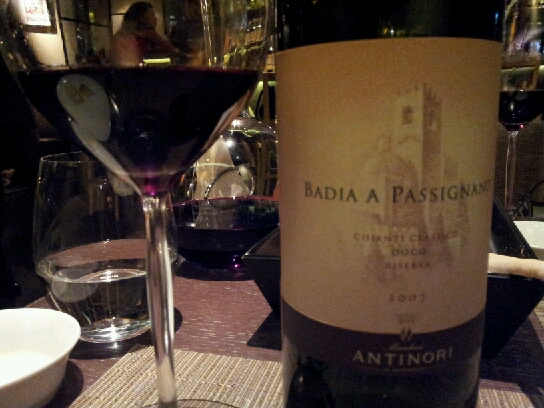
2007 Chianti Classico Badia a Passignano Riserva, Antinori

12 Sep 2012: Dinner at Otto e Mezzo, HK

2007 Chianti Classico Badia a Passignano Riserva, Antinori

100% Sangiovese. A plush style of Chianti Classico, with intensity of fruit flavours and silky tannin structure. Deep ruby. With a bit of aeration (30 - 40 minutes in the decanter), the classic floral, kirsch and red cherry bouquet layered with nuances of liquorice and smoke, was very attractive. Silky ripe tannin on the palate, with a good dose of acidity to balance the concentration of flavours. Lovely clean and long finish and the freshness, given the ripeness of the vintage, was very admirable. A pretty well-made and perfectly balanced wine, but not a profound one. Just the perfect accompaniment to the pappardelle dish with slow cooked lamb and mushroom, scented with rosemary at Otto e Mezzo. Drink now and over the next 6 - 8 years. 16.5/20

Thursday, 16 August 2012

Beauties from Central Italy

16 Aug 2012: Wine tasting dinner earlier this week and the theme was 'Anything Red but Bordeaux'. We went to Zhejiang Heen (very tasty food!!)  The food was Shanghainese (or nearby) cuisine, with all the usual favourites, such as braised meatballs, honeyed ham sandwiches, stir fried chicken and pine nuts in a rice crispy cone, smoked fish, and crispy eel, etc. Given the theme, the wine selection was rather eclectic amongst the 16 people who attended.  There were some rather big and powerful wines, such as the inky dark monolithic 2008 Joseph Phelps Insignia, with painfully intense aromas and flavours of cassis liqueur, blackberry jam, liquorice and tar, packed into an unctuous texture with ripe but very toothsome tannins. Great concentration, lengthy finish but it really wasn't ready, even with the 2.5 hours of decanting time.  Try again in 5 years time.  The 2005 Chave Hermitage was equally backward and needed every bit of the 2.5 hour of decanting time that we gave it.....but it could do with tons more. Compared with the 2003 that we had recently, this was made in a slightly more austere style (earthy, herbal and spicy notes) with quite angular tannin and bright acidity, quite extracted, which would require a lot more patience to mellow to display its superior heritage.  Should give it another 8 - 10 years before enjoying again, with a very long life ahead.

What really impressed me and what really went so well with the food were the Italian wines!  I was particularly impressed by the magnum of 2001 Sportoletti Villa Fidelia, a Bordeaux blend mainly consisting of Merlot with some Cabernet Sauvignon and Cabernet Franc, from Umbria.  Made by the Sportoletti family, with advice from Riccardo Cotarella.  Lovely cedar, graphite, blackberry, blueberry and liquorice notes, with velvety tannins and marvellous intensity and balance. A very charming wine, an absolute pleasure to drink now and went amazingly well with the braised meatballs and honeyed ham sandwiches! Drink now and for next 6 - 8+ years for optimum enjoyment. 17.5/20

The other wine I really liked and which I thought went beautifully with the crispy eels (and other dishes!) was the 2003 Isole e Olena Cepparello (100% Sangiovese from the estate's best sites in northern Chianti Classico, aged in French barrels for about 18 - 20 months).  I loved the gorgeously classic bouquet of floral, plum, cherry, spicy liquorice and some earthy notes, with a most elegant structure and balance of acidity and ripe velvety tannin.  There was this wonderful definition of generous ripe fruit and balance that gave the wine much elegance and poise, without any signs of over-ripeness from the hot vintage.  A beautifully crafted wine with a very long finish, bravo to the proprietor Paolo de Marchi.  Drink now and for the next 10 - 12 years. 18/20

The 2004 Argiano Brunello di Montalcino was a little muted on this evening.  It could have done with a bit more aeration to flaunt its elegance and finesse. There was some hint of ripe fruit but it lacked depth and intensity on the palate.  

While on the subject of Italian beauties from Central Italy, I enjoyed a bottle of 1998 Falesco Montiano last night with a few friends and was absolutely delighted by a most charming and elegant wine, fashioned out of 100% Merlot from Lazio, aged in French oak barrels.  A mature bouquet showing black cherry, plum, chocolate, liquorice, tobacco and some hints of leather.  The palate was a very smooth, cashmere-like texture of silky tannin, with just sufficient acidity to give the wine a very harmonious structure to pair with the eggplant parmigiana that I made.  Gorgeous effort (the wine and my eggplant parmigiana).  Loved the long finish! 18/20

Thursday, 31 May 2012

Accademia del Barolo in HK

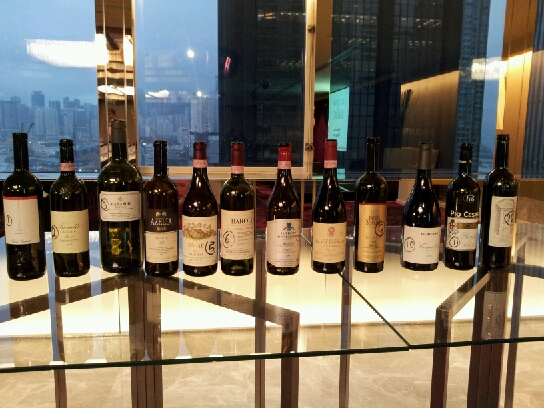
28 May 2012:  It was really a privilege to be invited to a Masterclass tasting of the 2007 vintage with the distinguished members of the Accademia del Barolo, which counts 14 producers amongst its members:  Azelia, Michele Chiarlo, Conterno-Fantino, Damilano, Poderi Luigi Einaudi, Gianni Gagliardo, Franco M. Martinetti, Monfalletto-Cordero di Montezemolo, Pio Cesare, Prunotto, Luciano Sandrone, Paolo Scavino,  Vietti and Roberto Voerzio.  This is the first time the Accademia's members visited Hong Kong. All except 2 (Luciano Sandrone and Roberto Voerzio) of the members sent in a representative (family member or the winemaker himself) or wine samples and in most cases, both!  The mission statement of the Accademia is to spread the word about Barolo and improve the overall public's knowledge of this King of wines (and wine of Kings).  Great kudos to Debra (and Sarah) who convinced the producer members to come visit HK during Vinexpo, to spread the word about Barolo to HK wine-lovers, and even better to bring their best bottles! 

All the wines showed amazingly well, each extremely expressive of the style of the producer, the character of the Nebbiolo grape and that of the terroir. Some were made in a more 'rustic', slightly more austere style,  while others showed more extraction (albeit retaining much elegance) wrapped in a more modern, readily approachable style.  It would be very hard to rank the wines because they were all so delicious.  Debra encouraged us to taste and re-taste the wines in the glasses, once they had had time to flourish and develop with aeration. All showed gorgeous ripe fruit and depending on the style, either floral or spicy, with chocolate/liquorice notes. All were extremely well balanced and beautifully structured.  My favourites were: Vietti Barolo Brunate which was feminine and voluptuous, Monfalletto-Cordero di Montezemolo Barolo Enrico VI which was aristocratic, lush and concentrated, and the Michele Chiarlo Barolo Cerequio which was very stylish, with great character and seductive aromas.....but I also admired very much the Paolo Scavino Barolo Bric del Fiasc (great aromatics, powerful and concentrated), the Pio Cesare Barolo (harmonious and elegantly balanced) and the Gianni Gagliardo Barolo Cannubi which was ever so ethereal, with silky tannin and very fresh fruit! 

The 2007 vintage line-up - absolutely gorgeous wines!!!
Debra and Patrick also very generously organised a private dinner for a few wine-loving friends with this distringuished group of wine producers on the previous evening, so that we would have the opportunity to speak to them in more casual setting.  Not only were we treated to some great bottles with some age, we were also regaled with a sumptuous buffet of fine cuisine prepared by Patrick (I loved the stuffed peppers - an unusual stuffing with pig's livers)!  The immaculately orchestrated procedure was rather annoyingly interrupted by an onslaught of flying termites which went on for almost an hour and a half before they retired to bed at 9 pm. I slightly lost track of what I tasted or not.....however, from memory, we tasted a very fine 2001 Vietti Barolo Brunate and a gorgeous 2006 Michele Chiarlo Barolo Cerequio with great intensity and depth.  The 1998 Paolo Scavino Barolo Riserva Rocche dell'Annunziata was definitely a favourite of mine, still flaunting so much vigour, concentration and firm structure.  Debra and Patrick were incredibly generous, as were our friends from Barolo, who were all incredibly friendly and so willing to share their passion and love of Barolo with us! 

We were all warmly invited to visit Piemonte which, like Burgundy of France, offers great food and great wine!!!  Let's drink more Barolo because it truly deserves to be celebrated!!

Tuesday, 3 January 2012

My Kind of Party Wines

3 January 2012: I recently was introduced to two wines, both in magnum format, which I thought did a wonderful job as the perfect party wine!


2003 Barbera d'Alba Riserva Vigneto Pozzo dell'Annunziata, Roberto Voerzio (in magnum):  (Double-decanted before leaving in an open bottle for 6 hours before serving.) 14.5% alcohol.  Deep ruby hue. Very ripe and bright black cherry fruit preserve, liquorice, minerals and toasty oak. Youthful, fresh and vibrant, intensity and complexity wrapped within a robust structure and full body.  Weighty on the palate, smooth and ripe tannin, balanced by exhilarating acidity (which I love). A wine of complexity, concentration and length. A phenomenal effort for this often under-appreciated grape variety!  Drink now with plenty of aeration and for the next 8 - 10 years while the vibrancy is upheld! Can't help noticing some stylistic similarity with an Amarone or a sturdy Valpolicella Superiore from a top name! 17.5/20


2001 Rosso Ca' del Merlo, Giuseppe Quintarelli: 15% alcohol. Traditional Valpolicella blend grapes from very old vines from a single hilltop vineyard.  Late-harvested and partially made in the ripasso method. Ca' del Merlo is translated as 'House of the Blackbird'. This is an IGT Veneto wine from Giuseppe Quintarelli, dubbed the Master of Veneto.  Herbal, plum, black cherry, earthy, liquorice and some leather. Harmonious and perfectly balanced (despite the high alcohol), with a velvety texture.  Delicious with the wood-fired spring lamb! A mid-weight wine with character and a lovely finish. Drink at peak now and over next 4 - 5 years for best enjoyment. 16/20

Sunday, 2 October 2011

1973 Robert Ampeau Meursault Perrrieres

1 Oct 2011: Paul and Julie hosted a most delicious dinner at their home.  We started with a 2000 Taittinger Comtes de Champagne. Ripe apple, citrus, white blossom, some toasty note, and with a taut minerality. Precise, pure and balanced.  Mid-weight, creamy mousse, and a very long finish.  Still very youthful but drinking very well now...Perfect aperitif!

Paul very meticulously arranged an interesting tasting of red and white for us.  First up, side by side two wines by Michel Niellon, 2004 Chassagne-Montrachet Les Chaumées 'Clos de La Truffière' and 2004 Chassagne-Montrachet Les Champs Gain.   Apparently the first bottle of Les Chaumées was madeirised.  While waiting for us to arrive (so sorry, Paul and Julie), the second bottle had already taken on some weight in the glass, showing a lovely rounded character, a complex bouqet of ripe peach, nutty, floral, lime and smokey, and firm acidity.  Whereas the Champs Gain (mid slope) was not so attractive by the time I got to it - it seemed a little out of condition.  I didn't get the typical broad and plump character with this wine.  Normally the Chaumées (higher up the slope and near to Saint Aubin) would be the more delicate and racy one....

Then two bottles of 2008 Vosne-Romanée Malconsorts, one by Dujac and the other Sylvain Cathiard.  We had them semi-blindtasted. From one decanter, the bouquet was bright fruit of raspberry and redcurrant, herbal and spicy, with some earthy character, and slowly emerging some lovely floral character.  Excellent backbone of vibrant acidity.  Very stylish and plenty of freshness, poise and purity.  The firm but fine tannin giving the wine an excellent texture.  Lovely mid palate and long finish.  From the other decanter, the wine seemed a little more evolved, revealing some warm scents of undergrowth and truffle, underneath the red cherry and Asian spicy notes.  Nicely perfumed. Very harmonious.  Perhaps slightly more rustic in style?  Medium weight and plenty of acidity and firm ripe tannin to help it age gracefully.  Both benefitted from decanting time.  Probably try again in 3 - 4 years time to let the various elements? I am still debating with Richard which was which.....one of us definitely switched our glasses the wrong way round!

The 1978 Leroy Vosne-Romanée was practically pronouned 'dead on arrival'.  A garnet-brown colour did not bode well and very soon, signs of madeirisation became very evident.  Lovely Sercial nose.

The 1990 Seghesio Vigneto La Villa was an interesting discovery.  Big and muscular, from the Monforte commune.  Spicy, mushroom, smokey and leather.  I decided to give it more time to develop and settle down.  Alas, I got rather captivated by the next wine.

The wine of the evening for me was the 1973 Robert Ampeau Meursault Perrières.  Deep golden colour.  Gorgeous nose of ripe pear, apricot, honeysuckle, white chocolate, butterscotch, macadamia, with smokey and spicy nuances.  The minerality was still very much evident.  Totally harmonious and integrated, flaunting extremely vibrant acidity, in an age-defying demonstration.  The finish went on for a very long time, with a spicy kick at the end.  Truly impressive!  I could have just drunk this all night, on its own or even better with some Epoisses and Maroilles!  Yummy!  This was our last bottle but for those who still have some, there is no hurry to drink it.....it will hold up quite well for a few years at this peak condition!  I would score this wine 19/20! 

I must mention Paul's "70-garlic cloves" gigot d'agneau.....served with Julie's mashed cauliflower and a zesty quinoa salad.....fabulous dish and it did its job remarkably accompanying the wines of the evening!  Thank you Paul and Julie! 


Sunday, 15 May 2011

5 Vintages of Sassicaia, including the legendary 1985

13 May 2011: I had spent weeks preparing for this Sassicaia wine dinner and I was really pleased to see that it finally took place at Cipriani restaurant. 5 vintages were to be tasted, including the legendary 1985 vintage and a succession of younger vintages: 1998, 1999, 2000 and 2003. I was wary that some of these vintages had not been terribly well reviewed by critics. Therefore, it really was quite a pleasant surprise that all the wines showed extremely well. It certainly helped that the chef did us proud with his perfectly executed dishes, of which the steak fiorentina particularly deserved special mention – the juicy sirloin almost melted in the mouth and the tenderloin, succulent and well-flavoured – just the perfect dish to go with the 1985.


The menu read like this:

Eggplant parmigiana – 2003 Sassicaia

Pappardelle with duck ragout – 2000 Sassicaia

Rack of lamb with balsamic sauce – 1999 and 1998 Sassicaia

Black Angus fiorentina steak - 1985 Sassicaia

Selection of Italian cheese

Sassicaia, the iconic wine, that many would compare with a classic classed growth claret, was responsible for bringing world attention to the Maremma region (and more specifically the Bolgheri strip) of Tuscany with its first commercial launch in 1968. Sassicaia bore more than one resemblance to Bordeaux: maritime climate, stony soils (Sassicaia is translated as “a field of stones”), and the grape varieties. Sassicaia went from strength to strength, culminating in the presentation of the legendary 1985, which Robert Parker claimed he had almost mistaken with a 1986 Mouton Rothschild on a number of occasions. This kind of compliment was no small feat and the making of Sassicaia was the lifetime achievement of one man, Mario Incisa della Rochetta, who through his passion, imagination and conviction made it possible, and now his son, Nicolò, with winemaker Dr. Sebastiano Rosa, are working hard to take this legacy to new heights, evidenced in the critics’ ratings of recent vintages, including 2006, 2007 and 2008.

The tasting of these 5 vintages revealed the consistently preserved hallmark of Sassicaia wines: understated elegance, balance, incredible freshness and the ability to age effortlessly. The microclimate, the soils, the choice of grapes (the combination of Cabernet Sauvignon and Cabernet Franc, the latter contributing elegance, much finesse and aromatics), and the age of the vines have all played a major role in maintaining this style, testament to its expressiveness of “terroir”, a word that would make the French proud of their heritage. [Up until 1987, the blend consisted of 90% Cabernet Sauvignon, the percentage of Cabernet Franc then increased to 15% and for the 2003 vintage, it was moved up to 19%.]

Brief notes of the vintages (decanted for 1 – 2 hours):

2003 Sassicaia – Deep ruby hue. Very spicy nose, layered with red cherry, plum, cassis, chocolate, liquorice, cedar and vanilla. Velvety texture belies the ripe chewy tannin and the ripe fruit completely enrobed the vibrant acidity. A rich and opulent wine, that is ready to drink now but will continue to evolve over the next 10 – 15 years. Finishes long, sweet and spicy. 18.5/20

2000 Sassicaia – Bright ruby core. Silky and lush, rather unassuming, but very refined. A very attractive nose of pot pourri, berry, with nuances of mint, cedar and lead pencil. Drinking perfectly now, but has potential to develop further over 8 – 10+ years. 17.5/20

1999 Sassicaia – Bright ruby. Not the strongest vintage in this evening’s line-up. A vintage plagued by lots of rain during flowering and during the month of July, which was followed by a burst of heat and sunshine in August. Yields were high to keep the alcohol down to an acceptable level. Complex nose of blackcurrant, violet, herbaceous, eucalyptus and mint, with some leather and savoury character coming through. Lighter in body than the other vintages, but drinking very well now, and will drink well for 4 – 5 years. 16.5/20

1998 Sassicaia – A lush and sensuous wine, with plenty of character. Extremely well balanced, well-structured. Plum, chocolate, spicy, eucalyptus nose. Well-integrated tannin, very smooth on the palate, with the unmistakable fresh acidity of Sassicaia. Finishes very sweet – great dish to go with the lamb with balsamic sauce! Drinking well now and will continue to evolve over 8 – 12 years. 18/20

1985 Sassicaia (in magnum) – what can I say?! Truly phenomenal, once it’s had time to open up in the glass. I had underestimated the time it would take to open up. After 1 hour in the decanter, it needed further time in the glass to reveal its full glory. A nose of blackcurrant, blueberry, violet, cedar, cigar box, leather and a hint of spice reminded me of a first growth claret at its peak! Firmly structured, having fully integrated all the elements, including the remarkable acidity and the robust tannin and some very ripe and concentrated fruit, without showing any signs of fatigue. A true classic that left us speechless, except to admire the finish that went on and on! 20/20

Before the dinner, I had only had limited experience of Sassicaia. Now, I am left with no doubt over its iconic status: Sassicaia has proven to me that it’s really in a class of its own!

Sunday, 1 May 2011

1997 Sassicaia - still going strong!

29 April 2011: I have been anxiously waiting to try the 1997 Sassicaia....having tried the 2000 recently.  We fished out a half bottle to have with our simple supper.  Deep ruby. Very Bordeaux left bank nose, blackcurrant, creme de cassis, cigar box, bell pepper, violet, with savoury, spicy and tarry nuances. Full of energy. Intensely flavoured, with creme de cassis, cloves and liquorice layered with creme de cassis.  Fully integrated ripe tannin and vibrant acidity. Brilliant finish. While not quite having the power and concentration of a great vintage for Sassicaia, it's a very fine and sophisticated expression of the Cabernet Sauvignon (and Cabernet Franc) grape variety from this part of Italy! Drinking now and will drink well over next 6 - 8 years with no sign of fatigue. 17.5/20

Sunday, 3 April 2011

Movio Puro Rose

29 Mar 2011: Corinne succesfully bid for a magnum bottle of 2001 Movia Puro Rosé at the AWSEC awards dinner earlier this month.  Naturally, we found a date for dinner to help her consume the bottle!  And I rather bravely (or foolishly) volunteered to babysit this magnum for 2 days before our dinner.  It turned out to be no normal baby-sitting!   

First of all, what is Movia Puro Rosé?  Is Movia Slovenian or Italian?  I believe half of the vineyards are in Slovenia but the Puro is DOC Collio (in Friuli-Venezia-Giulia).  Everything is natural and organic at Movia.  Puro is a traditional method sparkling method, using 100% Pinot Nero. After one day of maceration for the delicate colour, the lightly crushed grapes are gently pressed for fermentation. Only natural yeast is used for the fermentation.  The base wine is then matured for about 4 years in French oak barrels before fermentation in bottle.  I believe that at Movia, they do not use the standard sugar and yeast formula as liqueur de tirage.  Instead they add the must or young wine from the new harvest (with the naturally available yeast) to help put the second fermentation in bottle in action (need some help with the translation from Slovenian)?  The wine then spends more than 2 years in bottle prior to release.  Unlike most sparkling wine, no disgorging takes place prior to release to ensure a long life for Movia.  This wine is released undisgorged, with its lees still at the bottom of the bottle.  The winemaker believes that taking the lees away from the wine diminishes its flavours and the lees help extend the life of the wine (almost endlessly).  So your next question is: how did I disgorge this special wine??   I decided that I would spare my friends of an embarrassing mess in the restaurant and rather make a fool of myself and make a mess at home.

Here's what I did:  First I had to turn the magnum bottle on its head inside the fridge for about 2 days (I said about 2 days because halfway through the first day, I accidentally knocked over the bucket in which I had it precariously ensonced at an angle, upside down, and so I had to almost start again).  Then about half an hour before I took it out of the fridge, I filled the bottom of the bucket with ice cubes so as to chill the settled sediment at the neck of the magnum bottle.  Half an hour later, I took it out of the fridge, with the bucket and fill the bucket half way with water.  Then with one hand holding the magnum upside down with neck submerged in the icy water, I plunged the other hand in the freezing water to first remove the wire muzzle and then slowly ease out the cork.....And the next thing I heard was an explosive noise in the bucket, with crystal-like particles landing on my face, together with a few gushes of sparkling wine!  I spared no time to turn the bottle right side up and discovered that I had only lost about a quarter of the magnum (sorry, Corinne)!  Not too bad for a first attempt, I thought.  Next time, I'll get a bigger bucket and will know when to pull up the bottle much earlier.

So what did it look, smell and taste like???
Very clear!  Salmon pink. Redcurrant, raspberry, earthy, savoury, complemented by some warm spicy notes of cinnamon and nutmeg. Very harmonious and tasting so fresh with a creamy mousse and very fine-textured bubbles. Lovely lengthy finish, without any of the slight bitterness you sometimes find with traditional method rosé champagne. 17.5/20 (I encourage you to buy a bottle and try it for yourself!  Well worth the effort!)

After such an impressive start, the evening continued with a few other interesting wines.....
1978 Domaine de Chevalier Blanc
Lemon gold. Honey, lanolin, quince, pain grille, grilled hazelnuts, nougat. Medium body, well-balanced and structured. A fine finish, but I would advise drinking over the next 3 - 4 years, if you still have this wine, before the acidity runs out. 17.5/20

1992 Meursault Charmes, Lafon
Lemon peel, butter, smokey, melon, dried fig, grilled hazelnuts. Medium-full bodied. Firm acidity. Very long, slightly spicy(liquorice) finish. Beautiful!  Drink now and for next 6 - 8 years for optimum enjoyment. 18/20

1987 Leroy Volnay Champans
Animal, savoury, tobacco, red cherry, raspberry, spicy, floral. Some volatility started to reveal itself. Rather lean and ungenerous. A wine that saw much better days 4 - 5 years ago? 14/20

1995 Margaux
Blueberry, black cherry, liquorice, herbaceous, cedar, with just a hint of leather. Beautifully structured, with firm velvety tannin and well-balanced acidity, very soft and elegant but quite subdued.  Lengthy finish. A wine still taking its time to evolve, even after 2 hours of decanting and further time in the glass. 18/20

1993 Hermitage, Chave
Chocolate, coffee, red cherry, blackberry, black pepper, cloves, nutmeg, with a medicinal finish. Medium bodied. Medium acidity. Soft and silky, rather weak mid-palate and short on the finish. 16/20

1996 Yquem (half bottle)
Honey, apricot, orange peel, marmalade, nutty, smokey, biscuity. Medium- full bodied, firm acidity, well-balanced. Expressive and precise, without being flamboyant. 18/20

I would like to retaste the 1995 Margaux, perhaps alongside the 1996 Margaux, again....to see how these two vintages compare!