Showing posts with label Piemonte. Show all posts

Wednesday, 14 November 2018

Italian Diversity by Vinitaly International Academy


9 Nov 2018: To assign one hour for a seminar on the diversity of Italian grape varieties and wine styles was indeed a challenge for the speakers, Sarah Heller MW and Henry Davar, of the Vinitaly International Academy Faculty. With such tight schedule, the pair managed so gracefully to present to the curious audience six indigenous and lesser-known varieties amongst Italy's overwhelming number of indigenous varieties. Depending on who counted them, the number could be different. In the book "Wine Grapes" by J Robinson, J Harding and J Vouillamoz, the authors attributed 377 indigenous varieties to Italy out of a total of 1,368 from around the world (I guess if the authors were to include any more, this book would need to be presented in two volumes!) Anna Schneider, Italy's eminent ampelologist as quoted in "Native Wine Grapes of Italy" by I D'Agata, counted over 2,000 grape cultivars.  Whatever the number, it's impressively vast! Most of us would be lucky to have tasted 50 of Italy's indigenous varieties!


The seminar highlighted the biodiversity of Italian viticulture, citing the unique organoleptic qualities of Italy's grape varieties and how they have adapted over thousands of years to the local terroir. Although they express regional identity extremely, they do not travel so well, hence there are very few successful examples of Nebbiolo, Sangiovese and Aglianico (amongst others) grown in regions outside of the grapes' comfort zones in Italy, even less so in other wine regions around the world.


Apparently, the top 75% of Italian vineyards are grown with 80 varieties, whereas the top 90% of Italian wine production comes from just 30 varieties. In France, the top 90% of French wine is made from 15 varieties and in the US, only 9 varieties. Just think about that for one moment.


We tasted 3 white wines and 3 red wines at this seminar.


Verdicchio: La Staffa, Verdicchio dei Castelli di Jesi DOC Classico Superiore 2017According to our speakers, the indigenous grape variety from Le Marche, Verdicchio, is usually a cheerful wine to accompany seafood. However, this superior version by La Staffa is vinified in casks of acacia and cement, aged on fine lees for a few months. Bright freshness and complexity of flint, herbal (fennel), green apple, citrus, with some notes of yeast. Crisp finish that lingers, a beautiful expression of Verdicchio from this coastal region. Our readers reminded the participants that there is also another version of Verdicchio from inland where it enjoys bigger diurnal ranges, resulting in fleshier and riper fruit wines: Verdicchio di Matelica DOC.


Fiano: Ciro Picariello, Fiano di Avellino DOCGFiano is a thick-skinned variety from Campania. Its natural high acidity allows it to ripen well, given its late ripening tendency. This wine is made from grapes from two parcels, one parcel at Summonte (650 metres above sea level) and the other Montefredane (around 500 metres). Vinified in stainless steel, and aged on fine lees for about 10 months. Bottled with minimal sulphur, with no fining or filtration. This wine shows its typical character of almond, citrus and a delicate fruit character, almost star fruit-like. There is also an underlying mineral/flint character. Fiano has a great ageing ability - this wine can be cellared for a further 8 - 10 years, with very interesting evolution.


Timorasso: Vigneti Massa, Timorasso Derthona, 2016
Contrary to the last grape variety, Timorasso, a native of Piemonte, which was almost abandoned for 'dead', and was revived by Walter Massa, has much thinner skin. Therefore, skin contact is essential to help the skin release its aromatic compounds and a phenolic quality to the wine. To make this wine, the grapes typically undergo skin contact of 48-60 hours before fermentation. There is an unmistakable apricot, orange blossom and honey tone to the aromatic complexity.  With age, petrol-like character can develop, according to the speakers. The acidity is vibrant, that balances well the fleshy body.  It is a textural wine, but beautifully balanced. This wine is almost too young to enjoy properly at the moment.  Another 1 - 2 years will see it unfurling its potential to charm the palate.  Definitely a food wine!


Nerello Mascalesse + Nerello Cappuccio: Girolamo Russo, Etna Rosso 
Nerello Mascalese, the high-toned indigenous variety of Sicily has always been compared to Pinot Noir or Nebbiolo for its delicate red fruit and linear structure. It makes a perfect couple with its cousin Nerello Cappuccio in this almost "Burgundian-like" Sicilian red wine. This is typically a blend of 94% Nerello Mascalese and 6% Nerello Cappuccio, vineyards grown on ancient lava flows with varying age, mineral content and topsoil composition, giving the wine much complexity.  The wine is made with indigenous yeast, with no temperature control during fermentation.  No fining or filtration before bottling.  This wine exudes red fruit and rose-like aromatics (strawberry and raspberry) and a minerality underlines its core, soft tannins still showing some youthful astringency. This is an attractive wine and it is only the entry level for this former pianist turned winemaker!


Dolcetto: Cigliuti Dolcetto d'Alba 2016
The Cigliuti family has been living in this Piemontese region since the 18th Century.  Renato Cigliuti was the first member of the family to begin bottling his own wine in 1964.  Their vineyards are planted on the Serraboella hill, looking over Neive from the east. Their signature wine is Barbaresco but they also have the Dolcetto grapes planted in this Barbaresco region.  There is a nice taut astringency to this youthful expression of Dolcetto, but the tannins are beautifully managed.  Violet, plum, mulberry with cherry fruit completes the aromatics for this generous and charming wine, designed to be drunk early, within the next 12-18 months. A great lunch wine with good friends. 


Sagrantino: Arnaldo Caprai, Sagrantino di Montefalco Collepiano DOCG 2010
Sagrantino from Puglia is probably the most tannic red grape variety of Italy.  Arnaldo Caprai has invested a lot of time, energy and resources into the research of this indigenous variety to tame its tannins and to showcase its inner charm. This wine was aged in French oak barriques for around 22 months, with six more months in bottle before release.  This 2010 version has started to show some tertiary character, dusty and savoury notes, with ground coffee, mocha, dried flowers, some notes of vanilla "creme brulee" rounding off the finish.  This is a broad-shouldered wine, that has had its tannin structure tamed by age, now showing a firm but elegant presentation, with soft acidity just gliding off the palate.


This seminar was like taking a peep inside Italy's vinous treasure trove, but it was a very well-structured and educational introduction to Italy's diversity.  I believe it has left us all wanting to learn more about Italy's rich wine heritage. Our speakers on behalf of VIA extended a warm welcome to the audience to join its growing family of Italian wine ambassadors and experts!

Saturday, 20 October 2018

1997 Barolos

19 October 2018: To prepare for our upcoming trip to Piemonte, we decided to serve a few Barolos to get into the spirit of Piemonte!


1997 Barolo Brunate, Roberto VoerzioThis La Morra-based Barolo delivered a true to form elegance and delicate structure. The bouquet was black plum, blackberries, dried rose petals with some mature balsamic notes. The silky tannins were well-integrated and the wine delivered a sense of harmony and serenity. It's in a beautiful place to be enjoyed now. Drink now and over 3-4 years. 17/20

1997 Barolo Cannubi Boschis, Luciano SandroneHere there was much more riper and sweeter fruit. The core of the bouquet was baked plum, redcurrant, with a noticeable note of tar and mocha. This was a more flamboyant expression than the Voerzio Brunate,with more flesh, more textural fabric and more concentration, but somewhat lacking in finesse. This wine appealed to palates seeking a hedonistic experience. Drink now and over 4-5 years. 17/20

1997 Barolo Rocche dell'Annunziata Riserva, Paolo ScavinoThis wine showed an immense depth and a stylish mineral core which was very different from the other two Barolo expressions. There was a core of vibrancy complementing the elegant red fruit and spice notes. A very stylish wine that is drinking very beautifully now. Drink now and over 3-4 years. 17.5/20


Our fourth bottle to join the ranks was:

1998 Barolo Bric del Fiasc, Paolo ScavinoThis revealed a wine with intense ripe black fruit and velvety tannin structure. Notes of tar and liquorice abound. There was a firm structure from this Castiglione Falletto cru. While it was fleshy and opulent, and very enjoyable, it did not deliver the same class as the 1997 Rocche dell'Annunziata Riserva. Drink now and over 4-5 years. 16.5/20


And staying true to the region, we began with a delicious bottle of 2014 Timorasso, Derthona, Vigneti Massa.  

Sunday, 12 June 2016

Magnificent 1971 Conterno Barolo

11 June 2016: Invited to friends' home for dinner.  It was the original intention to have an Italian evening and our very hospitable hosts prepared a sumptuous menu of dishes including homemade taglioni with cuttlefish ink.


The evening started with a delicious 1998 Dom Perignon which was followed with a bit of diversion from Bourgogne and Portugal, before we homed in on the original Italian theme. The 1996 Vosne-Romanée Les Petits Monts, Joseph Drouhin was elegant and silky, showing its age but gracefully.


We were all rather impressed by the 2013 Meruge, Lavradores de Feitoria.  It was a blend of Tinta Roriz, Touriga Franca and Touriga Nacional, from a vintage marked by unusually low temperatures in April/May, followed by a hot dry summer and a wet September. This was a remarkable effort showing elegant balance, with an uplifting vibrancy, richness of fruit, spicy complexity, and a smooth texture. The alcohol, though high, did not throw the wine out of balance, supported by the ripeness of fruit.  The oak would need a bit more time to integrate completely but it was not too offensively overt (the wine was matured in new French oak for 12 months).  It was a well-crafted wine that could please the palate now or for further cellaring for 6 - 8+ years for further evolution.  Established in 1999, Lavradores de Feitoria is a co-operative consisting of 18 growers, with vineyard area of around 800ha in the Douro, from a range of altitudes 200 - 500 metres.  For Meruge, the grapes are sourced from two north-facing cool vineyards, thus explaining the freshness (for 2013, it recorded 5.3 g/l acidity).

Although it was brought by us, we had to admit that it was the star of the evening for us: 1971 Conterno Barolo, our last bottle. The last bottle was quite out of condition, so it was with a bit of anxiety when our host served it from the decanter. (We blind tasted all the wines.)  Underneath a slight whiff of volatile acidity, there was a glorious mature Barolo bouquet of dried roses, earth, hint of tar and leather.  The palate was silky and the finish long and harmonious.  A beautifully aged Barolo.  Richard felt that there was cellaring potential but I probably wouldn't keep this any longer.

The estate famed for premium Barolos with extreme longevity, was founded by Giovanni Conterno in 1908.  Giovanni believed in making the best Barolo and therefore it would only be made in great vintages.  When his son Giacomo returned from WW I, he joined his father in running the estate. Giacomo's 2 sons, Giovanni and Aldo, worked together until 1969 when Aldo broke off to set up Poderi Aldo Conterno.  Until the 1970s, the estate had no vineyards - it made wine from bought grapes.  As more and more farmers began bottling their own wine, the estate decided to purchase its own land.  In 1974, the estate purchased the densely planted 17-acre Cascina Francia vineyard in Serralunga d'Alba, one of Piemonte's great monopole vineyard (SW exposure, 400 metres high). Winemaking is traditional here from Giacomo's days: natural yeast, temperature-controlled fermentation, long maceration and ageing in Slavonian botti and bottles for 4 years before release.  So this bottle would have been made by grapes sourced by the estate.


The other wine that I particularly liked was the 1994 Gaja Sitorey (mostly Barbera with some Dolcetto).  I had thought it was a mature Barbaresco, still retaining plenty of freshness, but with the tannins softened out.  The new oak was well-integrated, and the bouquet was hint of spice, dried cherry, tar, and some leather. The acidity was still prominent and made great pairing with the roasted chicken and mozarella parcel. It was a very stylish wine, quite different from the humble Barbera and Dolcetto!  1994 was a disastrous vintage in Piemonte.  Angelo Gaja declassified 50% of his crop.


Monday, 30 November 2015

A Veritable Maestro

26 November 2015: Over 30 representatives of the local trade attended a tasting of newly released Gaja wines with Angelo Gaja hosted by Altaya Wines at the Kee Club in Hong Kong. Now 75 years of age with a long and distinguished career behind him, Angelo Gaja shows no sign of slowing down, and emphatically assures the audience, “I don't like to retire”. The pater familias of the Gaja family is delighted to share with us that his youngest, 22-year-old Giovanni, has shown an interest in the family business and is learning the ropes from his older siblings, Rossana who is responsible for the domestic business and Gaia who is responsible for the international business. 


For Angelo, the most important influence on the quality of the wine is the annual weather pattern under the effects of climate change. Soil and grape varieties are the constants. Quality has come with a better understanding of the soil and the vineyard. Since 1995, he has been applying cow manure to the soil to create humus, facilitating the growth of a healthy population of earth worms that keep working the soil. Biodiversity is important and the cypress trees are perfect habitats. Straw mulch cover helps drainage and prevents soil erosion. He has also engaged 7 vineyard consultants to help build this knowledge. 

Renowned for his radical ways of introducing temperature control and French barriques for maturation to traditional Piemonte, Angelo referred to himself as an artisan, and passion is the gene of the artisan.  He told us said that prior to 1966, there was no restriction on grape varieties for Barolo….so a number of the Barolos had Nebbiolo as well as other grape varieties in the blend. The reason he blended a bit of Barbera with Nebbiolo in Conteisa and Sperss was so that he could follow this artisanal origin, and he could fall back on the Langhe DOC. Speaking with a Maestro-esque theatrical flamboyance, Angelo confided in us an interesting allegory: that Cabernet Sauvignon was like John Wayne, predictable in the way he would dominate the room, and that Nebbiolo was like Marcello Mastroianni in Fellini’s 8 1/2, winning over the ladies in his quiet, sultry and mysterious ways.

 
The perfect charmer - Nebbiolo-based Conteisa and Sperss

Angelo certainly wowed the fans in the trade with his newly released wines. The range of newly released Gaja wines presented to the trade included wines from both Piemonte and Tuscany: 2013 Alteni di Brassica (Sauvignon Blanc), 2013 Gaia & Rey (Chardonnay), 2012 Barbaresco, 2011 Conteisa (92% Nebbiolo and 8% Barbera), 2013 Ca’Marcanda Magari (50% Merlot, 25% Cabernet Sauvignon, 25% Cabernet Franc) and 2011 Ca’Marcanda Camarcanda (50% Merlot, 40% Cabernet Sauvignon, 10% Cabernet Franc). The 2013 Gaia & Rey saw a tighter frame, trading the traditional lush structure for heightened minerality with a long crisp finish, and the 2011 Conteisa was a clear winner with the local trade, with such freshness, supple tannins and an open velvety texture, bearing the hallmarks of Cerequio (situated between Barolo and La Morra), and the 2013 Magari showed a well-balanced Bordeaux blend from the maritime climate of Maremma, with promise of soft ripe fruit and spicy nuances, very ready to please!

Delicious Magari, so ready to please!

Friday, 11 July 2014

A couple of bright stars from 1974!

9 July 2014:


We did the 1964s earlier....now it's the turn for 1974s......and thank you to the birthday boy for bringing them to dinner at Upper Modern Bistro!

1974 Louis Roederer: Amber gold colour. On the nose it was caramel and honey, toffee apple-like, with notes of roasted hazelnut. We had it served in a white wine glass. Delicate mousse, creamy texture, with a long caramelised finish. Almost like dessert...There was a good deal of complexity, coming in layers on the palate but it didn't quite have enough acidity to give it that extra dimension and lift! 16/20


2004 Chablis Les Preuses, William Fèvre: Pale gold hue. Nose of lemon peel, almond, pear, herbal, lightly spicy. Rich in texture, almost full-bodied. Crisp long complex saline finish. Great detail, precisely structured with such purity. Very classy. 18/20

1974 Cabernet Sauvignon Reserve, Simi Winery: (I did not look at the back but I guess this would be predominant Cabernet Sauvignon, with a minor percentage of other Bordeaux blend grape varieties?) Deep garnet colour. Mineral graphite note, paired with earthy, cherry, plum, with a slight herbaceous note which surfaced with extended aeration in the glass. Medium bodied, delivered great freshness, intensity of flavours and silky tannin. An excellent effort for the vintage! 16.5/20

1974 Cabernet Sauvignon, Inglenook: (Francis Ford Coppola purchased this winery in 1975 intent on restoring the former glory under Gustave Niebaum the founder and his grandnephew John Daniel Jr - so this would have been the last vintage made by its previous owner which was Hublein Incorporated.) Started off being slightly maderised but settled down a little with some aeration. On the palate, it was rich, fleshy, layered and chewy still. The fruit, still very much present, was very ripe (probably over-ripe), dried fruit and cooked prunes, with some dusty and liquorice notes. I didn't like so much the lowish acidity....found it a little cloying and uninspiring. 14.5/20

2001 Barolo Le Rocche del Falletto Riserva, Bruno Giacosa: (This bottle was opened at 3 pm, double decanted after opening, and then decanted at the restaurant from 8 pm till about 10 pm.) Deep garnet colour. Hot tar, tobacco, plum, redcurrant, earthy, liquorice spice on the nose. On the palate, it showed an opulently smooth texture, with perfectly balancing acidity. A powerful wine of immense structure, but rather elegantly presented and nicely proportioned. The finish was exceptionally long! An awesome wine (but I really think it should wait another 6 - 8 years before we enjoy it again)! 18.5+/20

1983 Hermitage La Chapelle, Jaboulet: (Decanted for an hour and a half before we tried it) This seemed rather subdued when served next to the Giacosa! A very attractive bouquet of red fruit, black pepper, herbs, leather, violet, with savoury and earthy notes. Really gorgeous, silky smooth on the palate, with wonderful acidity keeping the palate refreshed, Plenty of finesse and depth. Not a particularly long finish but I did not sense any dryness at the finish. Not a huge Hermitage, but a very elegant one it was and nowhere near its decline. Drink over next 5 - 6 years. 17.5/20

What a treat! The food was totally on form last night....I got my favourite pig's trotter dip, smoked salmon toast and artichoke macaroni. Those who went for the meaty main courses said that the chicken main course was really good! And of course, you cannot miss Jeremy's selection of cheese - I picked for us Comté 48 months, Coulommiers, Abbaye de Tamié, Fourme d'Ambert, a cheese like Saint Félicien but called Petit Mosellan and a couple others slipped in by our very friendly waiter (think one was Colombier). Absolutely delicious...and definitely worth saving room for it!

Sunday, 22 September 2013

The 9 Crus of 2008 Produttori del Barbaresco


14 Sep 2013: It was really a great treat to be invited to a tasting of the 9 crus of the Produttori del Barbaresco, all from the 2008 vintage, over a nice long meal at Si Mangia, a private kitchen focusing on Italian cuisine, overseen by Chef Ben and his wife. 11 of us occupied a table at the centre of the dining area of Si Mangia (www.simangia.com.hk), with plenty of space to fit 9 glasses per person, our plates and even room to scribble down your tasting notes! A real luxury as far as wine dinners go in HK! Although the restaurant did not have so many glasses for us, our thoughtful hosts arranged for Lucaris to supply the excellent array of glasses. Again another indulgence!


Produttori del Barbaresco is a Cantine Sociale (co-operative) that started in 1958. From the 19 founding families of growers whose holdings included majority control of some of the best vineyards such as Ovello, Montestefano, Moccagatta and Pajè, the Produttori has now grown to a membership of 54 families controlling 110 hectares of vineyards (approximately 22% of the entire DOCG), adding other prime vineyards such as Rabajà, Asili and Montefico, etc. The Produttori respects traditional winemaking practices and today, although it uses stainless steel tanks for fermentation, the wines all go through lengthy maceration of 40 to 60 days, depending on style and vintage. The crus are all aged for 3 years in large old botti before bottling. Typical production volume is 35,000 cases per year, including 40% of cru bottlings, 40% of bottling as Barbaresco and the remaining 20% as Nebbiolo della Langhe. There are 9 crus altogether: Ovello, Pajè, Pora, Rio Sordo, Moccagatta (Muncagota), Montestefano, Montefico, Rabajà and Asili. Our hosts had organised these 9 crus into 3 flights for us to taste and appreciate:


Flight 1 - common trait of rich soils?
Pora
Rio Sordo
Asili


Flight 2 - very good aromatics?
Pajè
Ovello
Muncagota

Flight 3 - structure and ageability?
Rabajà
Montefico
Montestefano


Here are my brief notes:
Pora: Notes of blackberry, black cherry, minty herb, tar, earthy and liquorice. Quite fleshy but in a rustic manner. Firm ripe tannin. Lovely aromatics. Lacks the refinement of the other crus.

Rio Sordo: Also quite rustic in style, more red fruit here, savoury and sinewy in structure. Astringent finish.

Asili: Both red and black fruit here, floral (violet), with herbal notes. Intense, weighty and powerful, but extremely well balanced. Almost a nice sweetness on entry. Refined firm tannin. Finishes long, beautiful.

Pajè: Quite closed initially. Reticent nose. But plenty of freshness from cool climate vineyards. Red fruit dominates.

Ovello: Black fruit, tar, liquorice and minty herb. A more forward style, quite opulent.

Muncagota: Almost Burgundian like. Medium bodied, delicate and refined, quiet and unassuming. Very elegant. Lovely long finish.

Rabajà: Aromatically intense, with herbal and floral notes. Well balanced, richness in body, but quite broad-shouldered, with robust tannic structure.

Montefico: Very linear, almost muscular, quite firm tannin. A poised and stylish wine....that needs some time to unwind.

Montestefano: Very ripe cherry fruit, plenty of complexity, vibrant acidity, firm ripe tannin. A very complete wine.

If I were to pick 3 best wines of the evening based on my experience this evening, they would be Montestefano, Rabajà and Muncagota for me......Ovello would be a close 4th! Then there would be Asili too!

Thank you so much to our most generous and thoughtful hosts! This was definitely a very well-organised tasting which allowed us to appreciate the great progress towards the highest quality that the Produttori had made in the past decade and in doing so, had preserved traditional practices and ensured that the wines would remain expressive of their individual terroirs. These are extremely impressive Barbaresco wines and most definitely will reward long term cellaring....if one can wait that long! And they are still reasonably priced compared to other big names!

Friday, 14 June 2013

An Authentic Expression: Timorasso

11 Jun 2013: I was very excited to try this bottle of 2010 Derthona Costa del Vento, by Walter Massa. I didn't know anything about this grape variety nor winemaker. Timorasso is the grape variety, native to Colli Tortonesi, in the province of Alessandria, Piemonte, bordering with Lombardia.  It grows well on calcareous-clay soils, to quite low yields.  Situated next door to Gavi, Timorasso had long been overlooked in the frenzy about refreshing, candied fruit flavoured Cortese, until one man championed its revival with a very singular passion, on initially a 1.5-hectare vineyard - Walter Massa of Vigneti Massa, based in Monleale, a town atop the Colli Tortonesi.  The answer to his conviction was in the bottle.  What a discovery! A medium gold hue.  With an hour of decanting, we were already in awe of the irresistible bouquet of honeysuckle, apricot, quince, candied fruit, layered with smoke, honey, toasted almonds and a light gingery spice.  And it kept evolving.... Creamy texture, laced with intense minerality underlying those rich flavours, giving an unctuous and vinous feel to the palate. A good acidity level gave vibrant lift to the lingering complex finish. This is not your typical quaffing wine but a serious wine that has yet to reach its apogee, at around 4 - 5 years after bottling. At 14.5% abv, I would probably have it later in the year, in the autumn/winter months - white truffle season! This will drink well for another 6 - 8+ years. Surprisingly no wood had been used here....made with indigenous yeast, with maceration of around 48 - 60 hours before pressing, fermentation temperature at about 18 - 22 degrees, vinification and ageing in stainless steel tanks, with regular batonnage.  It made a very nice pairing with the pasta with chicken gravy and truffle at Amuse Bouche!  This is the entry level of Massa's Timorasso range (I will be very happy to give it a rating of 17.5+/20.)....the cru called Strepi is apparently even more ethereal.   I would love to try it! (I thought it was DOC Colli Tortonesi, but I cannot find it anywhere on the label....)

The same evening, we also had 2 Barolos by Aldo Conterno, both decanted for about an hour and a half before we tried them.  2001 Gran Bussia Riserva and 2004 Romirasco. The 2004 Romirasco (from vineyard in Bussia, Monforte) was clearly the red wine of the night. A headturning intense and complex bouquet of tar, roses, mint, liquorice, plum and dark red cherry preserve notes, with some meaty and earthy nuances.  There is no question of its opulence and power, even before tasting.  On the palate, it was velvety and lush, full bodied, well balanced with vibrant acidity and firm tannin. There was a classy sophistication and elegance underneath the superficial big-ness and muscular structure. Drink now and over next 10 - 15 years.  18.5/20 The last time the Romirasco was bottled was in 1993.  This vineyard would normally go straight into the Gran Bussia Riserva blend.  There was no Riserva in 2004, as the Cicala vineyard was severely damaged by hail in 2004.  Fermentation of the Romirasco would take place in stainless steel tanks and the vines are roughly around 50 - 55 years old.  Skin contact would be around 30 days.  Ageing in large Slavonian casks for about 30 months.

The 2001 Gran Bussia Riserva delivered lovely aromatics, notes of dried rose petals, red fruit, tar, liquorice and herbal.  This seemed still quite youthful, with no sign of tertiary character.  Quite subdued on the palate, the finesse was apparent in the medium-bodied frame, but the flavours seemed a little short-lived leading to the finish.  Perhaps we're encountering this wine in the closed-up phase?  Drink now and over next 10+ years.  17/20  I had higher expectations for this wine which is a blend of the 3 vineyards, Romarisco, Cicala and Colonnello, in the proportion of 70%, 15% and 15% respectively, made in limited quantities and only in the best years.  Only the oldest vines would make it into the blend.  Fermentation and skin contact during 60 days in large Slavonian casks before ageing for 32 months. Only released after 7 years in cellar.

The 1971 Giacomo Conterno Barolo turned out to be a dud (expectedly)......and the 1997 Sandrone Barolo Cannubi Boschis was a little too super-ripe for our liking.  Notes of kirsch, black cherry, liquorice, tar, herbal, sun-dried fruit and even a hint of caramel on the bouquet.  Nicely balanced, with ripe tannin and a good dose of acidity, but the concentration on the palate was almost brutish.  Drink now and over next 5 - 6+ years. (Perhaps we should also revisit in a couple of years time to see if the dried fruit character will have evolved into something much more interesting.)  16.5/20

The real eye-opener tonight was the Timorasso.....simply brilliant!  Patrick, thank you so much for introducing this wine to us!

Thursday, 31 May 2012

Accademia del Barolo in HK

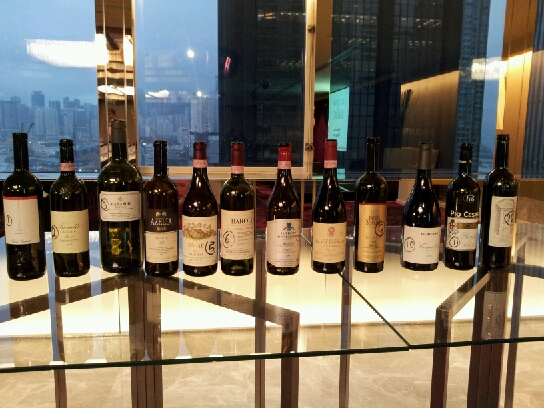
28 May 2012:  It was really a privilege to be invited to a Masterclass tasting of the 2007 vintage with the distinguished members of the Accademia del Barolo, which counts 14 producers amongst its members:  Azelia, Michele Chiarlo, Conterno-Fantino, Damilano, Poderi Luigi Einaudi, Gianni Gagliardo, Franco M. Martinetti, Monfalletto-Cordero di Montezemolo, Pio Cesare, Prunotto, Luciano Sandrone, Paolo Scavino,  Vietti and Roberto Voerzio.  This is the first time the Accademia's members visited Hong Kong. All except 2 (Luciano Sandrone and Roberto Voerzio) of the members sent in a representative (family member or the winemaker himself) or wine samples and in most cases, both!  The mission statement of the Accademia is to spread the word about Barolo and improve the overall public's knowledge of this King of wines (and wine of Kings).  Great kudos to Debra (and Sarah) who convinced the producer members to come visit HK during Vinexpo, to spread the word about Barolo to HK wine-lovers, and even better to bring their best bottles! 

All the wines showed amazingly well, each extremely expressive of the style of the producer, the character of the Nebbiolo grape and that of the terroir. Some were made in a more 'rustic', slightly more austere style,  while others showed more extraction (albeit retaining much elegance) wrapped in a more modern, readily approachable style.  It would be very hard to rank the wines because they were all so delicious.  Debra encouraged us to taste and re-taste the wines in the glasses, once they had had time to flourish and develop with aeration. All showed gorgeous ripe fruit and depending on the style, either floral or spicy, with chocolate/liquorice notes. All were extremely well balanced and beautifully structured.  My favourites were: Vietti Barolo Brunate which was feminine and voluptuous, Monfalletto-Cordero di Montezemolo Barolo Enrico VI which was aristocratic, lush and concentrated, and the Michele Chiarlo Barolo Cerequio which was very stylish, with great character and seductive aromas.....but I also admired very much the Paolo Scavino Barolo Bric del Fiasc (great aromatics, powerful and concentrated), the Pio Cesare Barolo (harmonious and elegantly balanced) and the Gianni Gagliardo Barolo Cannubi which was ever so ethereal, with silky tannin and very fresh fruit! 

The 2007 vintage line-up - absolutely gorgeous wines!!!
Debra and Patrick also very generously organised a private dinner for a few wine-loving friends with this distringuished group of wine producers on the previous evening, so that we would have the opportunity to speak to them in more casual setting.  Not only were we treated to some great bottles with some age, we were also regaled with a sumptuous buffet of fine cuisine prepared by Patrick (I loved the stuffed peppers - an unusual stuffing with pig's livers)!  The immaculately orchestrated procedure was rather annoyingly interrupted by an onslaught of flying termites which went on for almost an hour and a half before they retired to bed at 9 pm. I slightly lost track of what I tasted or not.....however, from memory, we tasted a very fine 2001 Vietti Barolo Brunate and a gorgeous 2006 Michele Chiarlo Barolo Cerequio with great intensity and depth.  The 1998 Paolo Scavino Barolo Riserva Rocche dell'Annunziata was definitely a favourite of mine, still flaunting so much vigour, concentration and firm structure.  Debra and Patrick were incredibly generous, as were our friends from Barolo, who were all incredibly friendly and so willing to share their passion and love of Barolo with us! 

We were all warmly invited to visit Piemonte which, like Burgundy of France, offers great food and great wine!!!  Let's drink more Barolo because it truly deserves to be celebrated!!

Tuesday, 3 January 2012

My Kind of Party Wines

3 January 2012: I recently was introduced to two wines, both in magnum format, which I thought did a wonderful job as the perfect party wine!


2003 Barbera d'Alba Riserva Vigneto Pozzo dell'Annunziata, Roberto Voerzio (in magnum):  (Double-decanted before leaving in an open bottle for 6 hours before serving.) 14.5% alcohol.  Deep ruby hue. Very ripe and bright black cherry fruit preserve, liquorice, minerals and toasty oak. Youthful, fresh and vibrant, intensity and complexity wrapped within a robust structure and full body.  Weighty on the palate, smooth and ripe tannin, balanced by exhilarating acidity (which I love). A wine of complexity, concentration and length. A phenomenal effort for this often under-appreciated grape variety!  Drink now with plenty of aeration and for the next 8 - 10 years while the vibrancy is upheld! Can't help noticing some stylistic similarity with an Amarone or a sturdy Valpolicella Superiore from a top name! 17.5/20


2001 Rosso Ca' del Merlo, Giuseppe Quintarelli: 15% alcohol. Traditional Valpolicella blend grapes from very old vines from a single hilltop vineyard.  Late-harvested and partially made in the ripasso method. Ca' del Merlo is translated as 'House of the Blackbird'. This is an IGT Veneto wine from Giuseppe Quintarelli, dubbed the Master of Veneto.  Herbal, plum, black cherry, earthy, liquorice and some leather. Harmonious and perfectly balanced (despite the high alcohol), with a velvety texture.  Delicious with the wood-fired spring lamb! A mid-weight wine with character and a lovely finish. Drink at peak now and over next 4 - 5 years for best enjoyment. 16/20

Monday, 5 September 2011

Dinner at Murano, London

3 Sep 2011: Dinner at Murano, an Angela Hartnett restaurant on Queen Street, London.  Decor is meant to be chic contemporary Venetian....I think.  They brought us some parmesan crisps and warm truffle-flavoured risotto balls as amuse bouche.  Then we were given some charcuterie and bread, as part of the amuse bouche.  Frankly, you probably wouldn’t need a starter after all this!  Menu is based on 3 or 4 courses, to be chosen from a selection of starters, main courses, vegetarian dishes, desserts and cheese.  So good to see a healthy selection of vegetarian dishes.  The chef had kindly prepared an off-the-menu langoustine starter for Richard and I took the warm caramelised tomato, lightly flavoured with balsamic vinegar, basil and smoked ricotta.  Then I had the linguine, with prawns, chilli and parsley.  Richard had the Iberico pork shoulder with pearl barley and salsify, which was tangy orangey.  The portions were perfect, and there was plenty of room for the cheese trolley, which is highly recommended.  We had a lovely Italian cheese with a name that would sound like ‘Medieval Castle’!  To add to this, we had Lincolnshire Poacher, Stinking Bishop and a Calvados-soaked Camembert.  We decided not to take dessert, but to our pleasant surprise, our waiter produced two ‘generous’ slivers of smoked lemon tart, a chef’s signature dish, apparently, together with a bowl of cherries and some hazelnut truffles.  Service was slick and impeccable and the restaurant felt spacious.  The food was perfectly executed and presented – attentive and imaginative cooking from the heart, a subtle display of talent.

For the wine, we took the sommelier’s recommendation.  2006 Lessona DOC, Proprietà Sperino: Traditionally a covinification of 95% Nebbiolo and 5% Vespolina (red grape variety related to Nebbiolo), grown on marine sandy, acidic but mineral-rich soil, at 295 – 350 metres above sea level. (Lessona DOC is north of Barolo, and next door to Gattinara DOCG). Use of natural yeasts.  28 days of maceration, followed by 13 months sur lie.  Maturation in barrels and 15 hl casks for 30 months, with further time in bottle, prior to release.  The 2006 vintage was aromatic, elegant, charming and very approachable, with a well-defined purity.  Lovely red fruit of red cherries, with slight herbal, earthy and floral character, with a hint of spice.  Medium in body, with smooth fine tannin and good level of acidity.  Went equally well with my linguine with prawns, chilli and parsley, as with Richard’s pork shoulder in a tangy orangey sauce. 16/20

A bit of background on this estate.  The estate was originally owned by the Sperino family, a renowned family of doctors, whose most notable members who contributed much to vinegrowing were Casimiro Sprino and particularly his son Felice Sperino, who was a close friend to Italy’s first ampelographer, and took active interest in indigenous grape varieties of northern Piemonte that were fast disappearing.  In the early 19th Century, as a result of no direct heirs, the estate passed to the De Marchi family, their close relatives.  Vinegrowing was abandoned for reasons of difficult economic climate and lack of economic scale to make the property work, without compromising on quality.  Paolo De Marchi (Isole e Olena, Tuscany) had dreamt of returning to his roots in Piemonte one day to revive the winemaking on their estate, and in 1999, he returned to the castle with his son Luca.  They have taken painstaking efforts to revive the tradition of vinegrowing and winemaking in Lessona and the results have been very encouraging.  Their first vintage was 2004, released in 2006.   Proprietà Sperino lies in the Castello quarter of the village of Lessona (Biella), among the foothills of the North Piedmont Alps.  The Nebbiolo grape is locally known as ‘Spanna’.

Monday, 24 January 2011

Bruno Giacosa Wine Dinner at Otto e Mezzo, HK

Our "senior" wine lover Maria
posing with Chef Bombana as
he shaved truffle over the chicken dish 
21 Jan 2011:  Armit Wines hosted a Bruno Giacosa wine dinner at Otto e Mezzo Ristorante, recently promoted to 2-Michelin star status in foodie Hong Kong.  It was an ideal venue where the chef and the winemaker shared the same pursuit for excellence and high quality.  Chef Bombana and his kitchen staff  did a brilliant job matching each course with the wine selection. 3 tables full of eager wine lovers, amongst whom Maria, who so much enjoyed the wines that she even took a selection of the empty bottles home and who would be proud to admit to be the oldest wine lover in the room!  (Here's a picture of Maria posing with Chef Bombana as he was vigorously shaving black truffle over the Challand chicken dish!)  Service was extremely professional and  impeccable: well-timed, efficient, and attentive.  We had a couple of last minute dietary requests which were taken care of without much of a grumble from the restaurant.  Well done, Bombana and Danilo!   Thank you so much for looking after us!

The menu read like this:

Array of Giacosa wines
Welcome Drink - Spumante Extra Brut 2005

Roast Langoustine in Shell, wiht aromatic herbs and bread crumbs, roast artichoke and pecorino cheese
2009 Roero Arneis: mineral, floral, nutty, pungent and spicy, firm acidity and full body, with a bitter almond aftertaste.  Very good match with the artichoke and scampi.  16/20

Burrata Cheese Ravioli, with black olive and eggplant sauce, "Datterino" cherry tomato
2003 Barbaresco Asili: burnt sugar, chocolate, tar, coves, liquorice, rich but a little funky. Velvety textured, very approachable despite its age, firm structure, good acidity, a wine with an untamed edge to it, but a perfect accompaniment to our food, probably even better with the risotto course (see below). Drinking now and the next 6 - 8 years.  16.5/20

Pumpkin Risotto, with braised beef cheek and Italian aromatic cheese
2003 Barolo Le Rocche del Falletto di Serralunga d'Alba: floral, truffle, herbal, earthy, mineral, spicy, with just a hint of tar and burnt sugar.  Much more elegant, still very fresh and very youthful. Chewy tannin and firm acidity. Drinking now and for next 10 - 15 years.  17.5/20

Truffled Roast Challand Chicken, with truffle jus and truffle mashed potato
2004 Barbaresco Rabajà: roses, tar, chocolate, winter spices (cloves, nutmeg, cinnamon).  Very firm acidity and robust tannin.  Youthful and unyielding.  Not ready to drink yet.  Will benefit from another 4 - 5 years in bottle to integrate the various elements.  18/20

Colorado Rack of Lamb, with confit vegetable black olive and lamb jus
2001 Barbaresco Rabajà Riserva: the pinnacle of the evening, a wine just at the point of revealing its greatness, encompassing harmony, power, concentration, depth and plenty of character.   A very perfumed and powerful wine, with a complex bouquet of roses, tar, mushroom, red fruit, figs and warm spices, and an opulent texture that coats your palate with those warm spicy, floral and earthy flavours.  A wine that remains long in your memory.  This is a rare wine as the cru name of Rabjà is no longer used as of 2007 vintage and this was the last Rabajà Riserva made by the estate.  So a real treat!  19.5/20

Wild Strawberry, with moscato jelly, mascarpone cream and crispy meringue
2008 Spumante Extra Brut Rosé: the dessert was just a fantastic match with this wine! 

I also sneaked a taste of 2004 Barolo Le Rocche del Falletto di Serralunga d'Alba Riserva brought by one of the guests and while it just about began to show its potential to develop into a glorious wine, it was definitely not ready yet and would benefit from at least another 10 - 12 years in bottle! 

All in all, a marvellous evening was had by all!  Some guests even lingered at the restaurant's bar to finish a bottle of 1971 Bas-Armagnac to keep the restaurant staff company while they were diligently clearing away the empty glasses! 

Sunday, 28 November 2010

Tuber Magnatum Pico Charity Dinner aka White Truffle Auction Dinner

14 November 2010: Whatever it takes to motivate people to donate towards a worthy cause – what an ingenious idea to make them bid for the ephemeral aroma of white truffle….I say this because I do not believe shavings of white truffle add to the texture of a dish……..therefore the addition is ornamental and sensory. So it was at the revival of the annual White Truffle Auction Dinner in Hong Kong, in aid of Mother’s Choice, a local charity organization whose mission is to find homes for deserted babies and to provide support for distressed mothers, where this idea originated. For years this white truffle auction dinner took place at the Ritz Carlton Hotel where Chef Bombana presided over the cuisine at Toscana restaurant and built his fame upon producing delicious cuisine based on the white fungus, exuding heady aromas. This dinner migrated to other cities when the Ritz Carlton Hotel was demolished to make way for another office block in Central. Chef Bombana and his team have found a new home at Otto e Mezzo and it has instantly become a favourite of local gourmands, who just cannot get enough of Chef Bombana’s cooking!


This year’s White Truffle Auction Dinner took place on Sunday 14 November. We were all told to arrive early for our Spumante so that we could be promptly seated at 6:30 pm. The reason for the early start was to coincide with the local auction in Piemonte, and so that Piemonte and Hong Kong could compete for the prestige of paying more for the giant truffle, the finale of the evening, and the scene at either location was telecast to the other so that Hong Kong, with our stomachs filled with Bombana’s cuisine and the delicious wines from Piemonte, could wonder at the vigorous waving of arms and excited pitches of our fellow bidders in Piemonte. Apart from the giant truffle which weighed in at 600g, diners at Otto e Mezzo also had the opportunity to bid on the smaller lots, which were no mean affairs, starting at 250g, I think. The event was sponsored by the Piemonte government and we were very lucky to have some really delicious wines from Piemonte! Tickets were rather limited for this exclusive event – only 9 tables of 12 guests per table. Needless to say, we had lots of bankers, lawyers, bon-viveurs, wine connoisseurs and gourmands amongst us, and naturally our two home-bred Masters of Wine did not miss this marvelous event!

I thought the dishes were all delicious, but my favourite was the risotto, something very comforting about a plate of piping hot creamy and al dente risotto, topped with a few shavings of white truffle, filling your nostrils with whiffs of earthy, intoxicating aromas. The chicken dish was also quite delicious but the flavours were so intense that I felt they overwhelmed somewhat the rather delicate white truffle. Anyway, the menu (and the accompanying wines with my tasting notes) is reproduced here for the foodies amongst you- all the dishes came shrouded with generous shavings of white truffle:

Tuesday, 21 September 2010

Private Kitchen Review: La Maison

17 Sep 2010 (photos to be inserted): I thought we would give this new restaurant a try while trying to decide on a venue for dinner with Jacqueline and Chris. The restaurant is in a multi-purpose building in a little cul-de-sac in Wanchai. The restaurant was completely full, with both private rooms taken, one sitting about 14 to 20 and the other about 8. I had read somewhere that the décor was French bistro-like. The menu might have read like a page taken from a French bistro menu but certainly not the décor, which if anything , resembled more that of a Swiss chalet, or at least the only wood-panelled wall, with a collection of pictures did take one’s memory to fondue and hot potatoes. The window sill that ran down the other side of the room was filled with an eclectic collection of artifacts and souvenirs from travels, including a framed picture of two teddy bears!

Thursday, 12 August 2010

The first birthday celebration this week


11 August 2010: Technically, it's a pre-birthday celebration for our friend Pin, as the actual day is on 19th August, but his fellow connoisseurs of fine wine and cuisine came all the way from Singapore to Hong Kong to pre-celebrate Pin's birthday at Otto e Mezzo in Central.


We kicked off with a Cristal 2002. A ripe fruit nose of pear, apple puree, custard tart, is enriched by notes of brioche, honeysuckle and honey. Medium-bodied, very fine mousse, the very embodiment of elegance and power. Probably drinking a little too young, will benefit from further bottle age. 18/20

Then followed the Gaja Rossj-Bass 2008. 100% Chardonnay. The citrus and lime blossom character was very apparent in this young wine, supplemented with lusciously rich notes of marzipan, honeysuckle, spicy oak, toast and vanilla. Full-bodied, rich and characterful. A little light on the acidity for my personal preference but still a very well-made wine. Good length. Would be interesting to try older vintages of this wine to see how it develops. 16/20

Served side by side for comparison was the 2000 Patrick Javillier Cuvée Speciale Corton-Charlemagne. It needed decanting time of 1+ hour and further time in the glass to develop. When it eventually opened up, it was a grand vin and went particularly well with Chef Bombana's signature dish of poached egg in artichoke puree sprinkled with delicious winter black truffle from Australia. Initially slightly closed nose (also because of over-chilling!). Complex bouquet of pear, melon and passion fruit, overlaid with butter, toast, spice, vanilla and mineral. Richness on the palate is well-balanced by a good level of acidity and youthful vigour. Benefitting from time in the glass, the wine opened up to reveal its complex, intense and rounded character, with immense concentration of flavours. A lingering finish. Perfect for drinking now, but will continue to evolve and drink well for another 6 -8 years. 17.5/20

Then came a pasta dish and Pin arranged for us to have a "small" portion of the lamb with rosemary pasta. We then served two reds, allowing them to further develop in the glass.

We tasted the 1993 de Voguë Bonnes Mares first (already decanted for 1 hour). Bright ruby colour. A most alluring and intense perfume of red fruits and floral aromas, raspberry, red cherry and violets, layered with spicy, mineral, tobacco, chocolate and tea leaves. Seamless integration of acidity and fine tannins, giving this wine a silky textue yet a vigorous structure. An elegant and sensuous wine, exuding extreme sophistication, classic beauty and leaving me with the memory of a great wine, showcasing Burgundy at its best. Finishes long and sweet. Drinking extremely well now and will continue to drink well for 10+ years. 19/20
Next we tasted the 1999 Gaja Conteisa. The ‘conteisa’ was the medieval quarrel between the zones of La Morra and Barolo over the prime vineyard land of Cerequio. Not entirely classic Barolo. It's 92% Nebbiolo with 8% Barbera, benefitting from the added freshness contribution from the higher acidity Barbera. (Hence the Langhe DOC.) Deep garnet-ruby. The wine had been decanted for 1.5 hour. A beautifully warm bouquet of rose, violets, mushroom, earthy, sweet spices, chocolate, prune and dried fruit rose to greet the nose. An extremely well-made wine, with a lively acidity, smooth tannins, velvety texture, concentrated fruit character, depth of character and a very fine structure. Lingering finish. A very fine wine indeed! 18/20

Seeing the last drops of Gaja Conteisa being emptied from the decanter, our palate yearned for another red. The 1999 Joseph Phelphs Insignia was called into action, but first it needed to be double-decanted. Predominantly Cabernet Sauvignon (71%), 21% Merlot, 6% Petit Verdot, 1% Cabernet Franc, 1% Malbec. Deep ruby. A complex and classic bouquet of blackberries, black cherries, bell pepper, sweet spices, cedar and tobacco. Full-bodied, rich mouthfeel and a long and powerful finish. Drinking well now, but will definitely benefit from further bottle ageing for another 5 - 6 years. 17/20

Pin and his friends had lamb for the main course. Richard had a rich beef dish! I had the turbot, which was delicious but I didn't quite get the red wine sauce as was mentioned on the menu! Wondered what sort of red wine Chef Bombana used for this reduction!

We finished the evening with the second 2002 Cristal. A rosé this time. A lovely pale salmon pink colour. Savoury and fruity character, redcurrant, strawberry, frangipane, with hints of thinly baked apple tart. Just a very elegant wine with great poise, concentration and finesse and a perfect conclusion to our evening! I liked it slightly more than the blanc. 18.5/20
Chef Bombana came at the end to join us for a few drops of our wine (he kind of got there a bit late!). Richard and I told him about how a taxi driver in Positano had heard about his famed truffle cooking and showed us a magazine in Italian with an article on the chef. The chef looked quite bemused about how far his reputation travelled! Found out that Chef was from Lombardia. Perhaps after our discussion last night, we might find more Valtellina and Valtellina Sforzato on the wine list at Otto e Mezzo! We all thought Chef Bombana's cooking was superb and was definitely of 1 Michelin star quality!

Thank you very much, Pin, for inviting us to join in your pre-birthday celebration! I can't wait to hear what you will be drinking on the actual day!