
Sunday, 11 August 2013
1997 Roumier Bonnes Mares

Clos de La Roche: 1985
9 Aug 2013: We picked the Rainbow Restaurant at Hotel Indigo, Wanchai as our venue for the 1985 Clos de La Roche show-down between Ponsot and Dujac (the bottles!). For a Friday night, the Rainbow Restaurant was not too busy, but this served us perfectly well, as we could have a larger table to accommodate our bottles and glasses! Service was friendly and professional at the restaurant. There was generally good glassware but perhaps they could invest in a few Burgundy glasses for future visits!
Food was rather tasty. I had ordered the signature prawn dish, which I spotted in the SCMP write-up a few months ago....it was elegantly presented and the prawn tasted very fresh but the sweet and tangy sauce made the pairing with our wines rather challenging - this would have gone better with a late harvest Riesling or Riesling Grand Cru from Alsace for example. The rest of the dishes worked better with our wines: roast pork belly, with crispy skin and very succulent meat, with the fat melting in your mouth! Crispy salt and pepper frog's legs were also well executed. The sweet and sour pork was also a highlight - pork pieces not too fatty, coated with a light batter, was not oily at all, and married perfectly with the traditional sweet tangy sauce and pineapple. The spring onion and soya sauce chicken was really tasty - the chicken meat was tender, and soaked up the spring onion and soya sauce in every bite! I had ordered a wild mushroom and Angus beef stir fry - also nicely done. For vegetables, the restaurant offers a choice of local vegetables or Australian organic vegetables. I went for the stir fried Australian organic spinach. It was really delicious, full of taste and also still retaining the crunchy texture. We finished with deep fried noodles and pork - again the chef perfected this with a most delicate touch - it did not taste greasy at all, just very crispy noodles with nicely flavoured sauce.

As for the wines, we started with 1995 Leflaive Puligny Montrachet Les Pucelles. Medium gold in colour. Initially I thought the wine tasted a little dull and uninteresting, amid suspicions of oxidation. However, it perked up with aeration. Nutty, liquorice, white chocolate, fig, honey and quince. Still retaining a good dose of acidity to keep the balance against the richness. Rich, still well structured, perhaps a little heavy for some. I would probably advise drinking up. 17/20
The 1999 Raveneau Chablis Les Clos was a modest pale lemon in colour. Expressive on the nose, especially when it had arrived a little warm, with notes of lime blossom, citrus, green apple, white peach and almond. A little more austere on the palate, steely and racy, with more saline and minerally notes appearing at the finish. Nice concentration for the vintage. This opened up further during the course of dinner. Drink now and over next 5 - 6+ years. 18/20
The 1985 Ponsot Clos de La Roche Vieilles Vignes was much more evolved than we had expected. The mature bouquet of prune, animal, savoury, mushroom and humus notes, with some blackberry notes,was added a hint of caramel and even nail varnish, according to Richard. Seductive, velvety on the palate, with very lush and dense flavours. There was less vigour and freshness on the palate, than expected. A wine to be drunk now. There might not be much upside and it seemed to be showing some signs of decline at this tasting. (Storage might have accounted for this bottle variation because the last bottle that Richard had was not like this, even if it was only a couple of years ago.) 17/20
The 1985 Dujac Clos de La Roche was quite different altogether. A much fresher bouquet, consisting of floral, truffle and savoury notes, still with the hint of caramel. Much more delicate than the Ponsot, in terms of structure and intensity of flavours. Less generous on the palate. A little dryness on the finish. A nicely mature wine, still showing some finesse, but perhaps not one to hold out for much longer. Drinking up would be recommended. 16.5/20
One of our friends sneaked in a 1990 Leroy Clos de La Roche. This was a much more robust and structured wine, without the finesse of the other 2 wines. Dense and intense flavours of black fruit and spice. Initially, there was even a slight metallic note which blew off after a while. Quite austere still. Could do with a little bottle age or aeration. Finishes long. 18/20
This tasting seems to be me rather inconclusive. We should look at doing a more comprehensive tasting of 'Clos' wines over a period to get a better sense of the Morey Saint Denis Grands Crus.
 |
| Signature Prawn Dish |
The 1999 Raveneau Chablis Les Clos was a modest pale lemon in colour. Expressive on the nose, especially when it had arrived a little warm, with notes of lime blossom, citrus, green apple, white peach and almond. A little more austere on the palate, steely and racy, with more saline and minerally notes appearing at the finish. Nice concentration for the vintage. This opened up further during the course of dinner. Drink now and over next 5 - 6+ years. 18/20
The 1985 Ponsot Clos de La Roche Vieilles Vignes was much more evolved than we had expected. The mature bouquet of prune, animal, savoury, mushroom and humus notes, with some blackberry notes,was added a hint of caramel and even nail varnish, according to Richard. Seductive, velvety on the palate, with very lush and dense flavours. There was less vigour and freshness on the palate, than expected. A wine to be drunk now. There might not be much upside and it seemed to be showing some signs of decline at this tasting. (Storage might have accounted for this bottle variation because the last bottle that Richard had was not like this, even if it was only a couple of years ago.) 17/20
The 1985 Dujac Clos de La Roche was quite different altogether. A much fresher bouquet, consisting of floral, truffle and savoury notes, still with the hint of caramel. Much more delicate than the Ponsot, in terms of structure and intensity of flavours. Less generous on the palate. A little dryness on the finish. A nicely mature wine, still showing some finesse, but perhaps not one to hold out for much longer. Drinking up would be recommended. 16.5/20
One of our friends sneaked in a 1990 Leroy Clos de La Roche. This was a much more robust and structured wine, without the finesse of the other 2 wines. Dense and intense flavours of black fruit and spice. Initially, there was even a slight metallic note which blew off after a while. Quite austere still. Could do with a little bottle age or aeration. Finishes long. 18/20
This tasting seems to be me rather inconclusive. We should look at doing a more comprehensive tasting of 'Clos' wines over a period to get a better sense of the Morey Saint Denis Grands Crus.
1989 Bordeaux: Consistently Delicious

10 August 2013: Our hosts provided the perfect settings for a tasting of 1989 Bordeaux (thanks to everyone's generous contribution). 1996 Veuve Clicquot La Grande Dame decapitated (by sabre) at the edge of the swimming pool, against a backdrop of a lazy summer sun slowly retiring over the Hong Kong waters, a few yachts hurrying back to the marina at the end of a beautiful day at sea. The starter was a cold gaspacho of green tomato, avocado and crab meat, mixed with shrimp bisque This was nicely accompanied by a very elegant and refreshing 2008 Ramonet Chassagne-Montrachet Les Ruchottes in magnum: already showing an open bouquet of citrus, lime blossom and toasted almond notes, with some mineral complexity and richness lingering on the mouthcoating palate, and very fine long finish. A very fine effort (17.5/20), and why wait! (The incidence rate of premature oxidation for white Bourgogne wines has become rather alarming for us that we have decided to drink them much earlier than we would normally!)
 |
| Duo of Risotto |
Here's a list of the 1989 Bordeaux wines that we tasted, unfortunately a little skewed towards the Left Bank, but we shall make it right on a future occasion!
1989 Bahans Haut Brion: This second wine totally surprised us all with how well it had held up! An almost heady Graves bouquet of sweet tobacco, cigar box, leather, savoury, roasted thyme, and stoney notes. On the palate, the entry was almost sweet and juicy, with a fleshy texture in a medium frame. Acidity was low-ish, but the structure still very much intact. Finishes long. A very pretty wine! 17/20
1989 Léoville Las Cases: A little dusty, with notes of leather and blueberry. Quite lean on the palate. Lacking in tension, energy, weight and concentration to merit a higher score. Low acidity. Drying on the finish. Probably the weakest 1989 in this line-up. I would drink up this wine. 16/20
1989 Léoville Poyferré (in magnum): A very expressive bouquet of cedar, tobacco, leather, even mint, with notes of plum and raspberry and blackcurrant. There was great depth, freshness and concentration in the velvety texture of well-defined structure and fine balance. There was still more than a hint of the firm tannin which could take some years to resolve. Definitely a wine with a long future ahead. Drink now or over next 10+ years. 18/20
1989 Montrose: This was the star of the line-up. Probably the deepest colour of the line-up as well. A very plush bouquet of dark chocolate, sweet cigar tobacco, cedar, violet and graphite. With time in the glass, notes of game and leather became more apparent. Lovely concentration and depth on the palate, firm but ripe and velvety tannins still present in the structure. Harmonious and finely balanced, though without the more precise definition and profundity of the 1990. 18.5/20
1989 Lynch Bages: A very Pauillac nose, cassis, tobacco, with just a hint of mint, bell pepper and pepper. Medium bodied. Fine tannin. A slightly chalky, bitter and peppery finish. 17/20 (perhaps there was some bottle variation?)
1989 Pichon Baron: This seemed to be at a different point of development compared to the others. Quite vigorous and youthful still. Blueberry, tobacco, cedar and almost herbal/medicinal notes of bell pepper and mint. Still displaying a firm structure, with refreshing acidity. Medium framed. Lacked charm, rather aloof! Wonder how this will evolve in 10+ years time...... 17.5/20
1989 Angélus: Sweet preserved plum, fruitcake, chocolate, liquorice, with savoury notes. Almost full-bodied, seductively lush on the palate. Could do with a touch more acidity to avoid being a little on the 'soupy' side. Drinking beautifully, at peak now. 17.5/20
1989 Cos d'Estournel: There was some resemblance with the Montrose: plum, liquorice, earthy, violet and stoney/graphite. Medium bodied, smoothed out tannins. Fine acidity, giving nice freshness to this weighty effort. Did not quite have the concentration and depth of the Montrose, but very fine and harmonious too. There is no hurry to drink up this wine.....drink now or over next 10+ years. 18/20
Our hosts surprised us with a 1989 Vouvray Moelleux Clos du Bourg Moelleux 1er Trie by Huet. Lovely notes of honey, quince and marmalade. Luscious but not heavy on the palate, still preserved quite a bit of freshness. Sweet tangy finish. A lovely accompaniment to the cheese platter.
We finished with a 1983 Climens......which I didn't get round to as I was too busy with the pear tart (this came from Monsieur Chatté - I highly recommend - one of the best I've ever had!!!)
What a great tasting and the best thing was that largely the wines were very consistent, most with still a way to go! Thank you everyone for your contributions! We look forward to the next!
Friday, 9 August 2013
James Suckling's Top 100 Wines in 2013 from the Douro!
9 Aug 2013: We just came back from a trip to Portugal (more later)......and was really happy to see some of the wines we really liked featured in this latest report by James Suckling (including Quinta da Maritávora, Churchill's, Quinta de La Rosa,Wine & Soul Quinta da Manoella, Quinta do Vale Meão, Conceito, Lavradores de Feitoria, Quinta do Vallado, Quinta do Passadouro)! So many hidden gems, not just in the Douro Valley, but also in Bairrada, Dao, Alentejo and even Algarve! - we were so impressed by the consistent quality amongst the top wines!
Tasting Report: My Best 100 Wines in 2013 From Portugal's Top Winemaking Region – Douro | Wine ratings, Wine reviews, Wine tasting notes & Wine videos
Tasting Report: My Best 100 Wines in 2013 From Portugal's Top Winemaking Region – Douro | Wine ratings, Wine reviews, Wine tasting notes & Wine videos
Sunday, 14 July 2013
Old School Riojas
12 Jul 2013: We've often heard about the allure of old Riojas and we finally found the proof in the drinking! A few wine lovers got together for an old Rioja evening - the definition of old was 1982 or older. Naturally they all came from the old school bodegas, including CVNE, López de Heredia, Marques de Murrieta and Marques de Riscal - the only one missing was La Rioja Alta. Everyone very generously contributed some prized old Rioja bottles.... Despite the minimal coordination amongst ourselves, we were able to organise the wines of the evening into 4 flights.
We started with a 1981 Viña Tondonia Blanco Gran Reserva. Golden amber in colour. There were notes of honey, toasted almonds, liquorice and orange peel on the nose, with a lanolin note on the waxy mouthfeel. Finishes long. This made a wonderful accompaniment to the iberico ham!

First flight of reds was a CVNE Viña Real flight. CVNE was founded in Haro in 1879 and the family-owned company consists of 3 wineries: Cune, Viña Real and Viñedos del Contino. The Viña Real winery is located on top of the Cerro de la Mesa, in Rioja Alavesa. The vineyards are located near the old Camino Real, hence the name Vina Real. We tasted 1954 Reserva Especial, 1962 Reserva Especial, 1970 Gran Reserva and 1973 Gran Reserva. The Gran Reserva is largely Tempranillo, with a small percentage of Graciano.
1973 Viña Real Gran Reserva: A complex bouquet of caramel, nutty, with mushroom and savoury notes. Silky texture. Still retaining good level of acidity. There's an almost sweet sensation on the finish. This wine grew on me, with time in the glass.
1970 Viña Real Gran Reserva: Earthy, tobacco and some violet notes. More linear in style, a little firmness in the structure, with a dry finish.
1962 Viña Real Reserva Especial: Tertiary notes of leather, animal, coffee and savoury notes dominated the nose, with just a hint of soya sauce. Quite restrained on the palate. Would it benefit from more time?
1954 Viña Real Reserva Especial: This was the best wine in this flight, I thought. A medium ruby colour, turning garnet at the rim. Lovely notes of violet, plum with some earthy notes. Still showing vibrant acidity, a harmonious structure, vigour and freshness. Finishes long. A wine with such old world charm, timeless elegance and harmony.
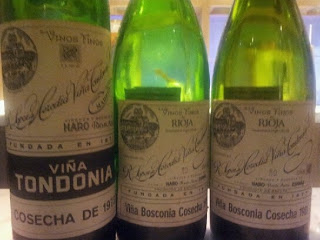
Next flight was 3 wines from López de Heredia Viña Tondonia. Don Rafael López de Heredia y Landeta, inspired by the French love for wine, and the wonderful terroir of Rioja Alta, began construction of the bodega in 1877 in Haro. The Tondonia vineyard enjoys a remarkable mesoclimate, by its proximity to the River Ebro and covers 170 hectares. The soil is alluvial clay, with a high proportion of limestone. We had 3 examples of the Gran Reservas: 1973, 1976 and 1981. Viña Tondonia is about 3/4 Tempranillo, with the balance made up of Garnacha, Graciano and Mazuelo, all from own vineyards.
1981 Viña Tondonia: Quite bretty....I didn't make much of this...
1976 Viña Tondonia: hot vintage. Notes of caramel, plum and leather on the nose. Lovely richness and concentration on the lush palate and finishes long and complex. Still tasting quite fresh, with an intact structure. I liked this best of this flight.
1973 Viña Tondonia: A little volatile....perhaps we thought that contributed to the elegance and freshness. Seemed to lack concentration. Collapsed rather quickly in the glass.

The third flight was 2 wines from Marqués de Murrieta...both Castill Ygays. The Marqués de Murrieta projected started in 1852 when Luciano Murrieta y García-Lemoine presented the first fine Rioja wine and exported it overseas for the first time in the region's history. The success encouraged him to purchase the Ygay Estate and build the Castillo Ygay. The estate is a single vineyard covering 300 hectares, located in the southern part of Rioja Alta, with a climate moderated by the Cantabrian Mountains. Castill Ygays are Gran Reserva wins, matured for 2.5 years in American oak barrels and 3 years in bottle. We tasted the 1942 and 1978 vintages.
1978 Castillo Ygay: A rancio and oloroso-like nose of liquorice, walnut, coffee and gamey notes. Medium body.....firm acidity. Not as elegant as the 1942, quite meaty.
1942 Castillo Ygay: More palo cortado like on the nose, with notes of coffee, chocolate and burnt match.....slowly revealing an elegant but lively palate.....and amazing depth. Very impressive. I was told this was bottled in 2005.

The last flight was not really a flight as such, but a single bottle of Marqués de Riscal Reserva. Marqués de Riscal was founded in Elciego, Rioja Alavesa in 1858 by Guillermo Hurtado de Amezaga. The Reserva wines are made from Tempranillo grapes grown in clay-limestone soils of Rioja Alavesa, with some addition of Graciano and Mazuelo grapes, usually not more than 10%. We tasted the 1954 Reserva. Sadly it was completely maderised!
We then finished with an unctuous and lusciously rich Alvear Pedro Ximenez de Solera 1927, Montilla-Moriles, packed with 400 grams of sugar in every litre. Like a pruney nectar with a tangy balance, it glided slowly down the throat.....delivering amazing complexity and balance. Long long finish. This was a stunning PX....that deserved a lot of attention!
Our dinner took place at Quemo, where the chef produced an excellent array of dishes...particular recommendations were smoked eggplant, egg with prawn and chorizo, paella (we had both - squid ink and quail's leg) and roast whole baby lamb and iberico pork! While the ambiance was great, the glassware and wine service could do with some improvement.....but perhaps it's not a venue meant for complicated wine dinners. I would like to go back to Quemo for a more casual dinner, so that I can relax and just enjoy the food!
We started with a 1981 Viña Tondonia Blanco Gran Reserva. Golden amber in colour. There were notes of honey, toasted almonds, liquorice and orange peel on the nose, with a lanolin note on the waxy mouthfeel. Finishes long. This made a wonderful accompaniment to the iberico ham!

First flight of reds was a CVNE Viña Real flight. CVNE was founded in Haro in 1879 and the family-owned company consists of 3 wineries: Cune, Viña Real and Viñedos del Contino. The Viña Real winery is located on top of the Cerro de la Mesa, in Rioja Alavesa. The vineyards are located near the old Camino Real, hence the name Vina Real. We tasted 1954 Reserva Especial, 1962 Reserva Especial, 1970 Gran Reserva and 1973 Gran Reserva. The Gran Reserva is largely Tempranillo, with a small percentage of Graciano.
1973 Viña Real Gran Reserva: A complex bouquet of caramel, nutty, with mushroom and savoury notes. Silky texture. Still retaining good level of acidity. There's an almost sweet sensation on the finish. This wine grew on me, with time in the glass.
1970 Viña Real Gran Reserva: Earthy, tobacco and some violet notes. More linear in style, a little firmness in the structure, with a dry finish.
1962 Viña Real Reserva Especial: Tertiary notes of leather, animal, coffee and savoury notes dominated the nose, with just a hint of soya sauce. Quite restrained on the palate. Would it benefit from more time?
1954 Viña Real Reserva Especial: This was the best wine in this flight, I thought. A medium ruby colour, turning garnet at the rim. Lovely notes of violet, plum with some earthy notes. Still showing vibrant acidity, a harmonious structure, vigour and freshness. Finishes long. A wine with such old world charm, timeless elegance and harmony.

Next flight was 3 wines from López de Heredia Viña Tondonia. Don Rafael López de Heredia y Landeta, inspired by the French love for wine, and the wonderful terroir of Rioja Alta, began construction of the bodega in 1877 in Haro. The Tondonia vineyard enjoys a remarkable mesoclimate, by its proximity to the River Ebro and covers 170 hectares. The soil is alluvial clay, with a high proportion of limestone. We had 3 examples of the Gran Reservas: 1973, 1976 and 1981. Viña Tondonia is about 3/4 Tempranillo, with the balance made up of Garnacha, Graciano and Mazuelo, all from own vineyards.
1981 Viña Tondonia: Quite bretty....I didn't make much of this...
1976 Viña Tondonia: hot vintage. Notes of caramel, plum and leather on the nose. Lovely richness and concentration on the lush palate and finishes long and complex. Still tasting quite fresh, with an intact structure. I liked this best of this flight.
1973 Viña Tondonia: A little volatile....perhaps we thought that contributed to the elegance and freshness. Seemed to lack concentration. Collapsed rather quickly in the glass.

The third flight was 2 wines from Marqués de Murrieta...both Castill Ygays. The Marqués de Murrieta projected started in 1852 when Luciano Murrieta y García-Lemoine presented the first fine Rioja wine and exported it overseas for the first time in the region's history. The success encouraged him to purchase the Ygay Estate and build the Castillo Ygay. The estate is a single vineyard covering 300 hectares, located in the southern part of Rioja Alta, with a climate moderated by the Cantabrian Mountains. Castill Ygays are Gran Reserva wins, matured for 2.5 years in American oak barrels and 3 years in bottle. We tasted the 1942 and 1978 vintages.
1978 Castillo Ygay: A rancio and oloroso-like nose of liquorice, walnut, coffee and gamey notes. Medium body.....firm acidity. Not as elegant as the 1942, quite meaty.
1942 Castillo Ygay: More palo cortado like on the nose, with notes of coffee, chocolate and burnt match.....slowly revealing an elegant but lively palate.....and amazing depth. Very impressive. I was told this was bottled in 2005.

The last flight was not really a flight as such, but a single bottle of Marqués de Riscal Reserva. Marqués de Riscal was founded in Elciego, Rioja Alavesa in 1858 by Guillermo Hurtado de Amezaga. The Reserva wines are made from Tempranillo grapes grown in clay-limestone soils of Rioja Alavesa, with some addition of Graciano and Mazuelo grapes, usually not more than 10%. We tasted the 1954 Reserva. Sadly it was completely maderised!
We then finished with an unctuous and lusciously rich Alvear Pedro Ximenez de Solera 1927, Montilla-Moriles, packed with 400 grams of sugar in every litre. Like a pruney nectar with a tangy balance, it glided slowly down the throat.....delivering amazing complexity and balance. Long long finish. This was a stunning PX....that deserved a lot of attention!
Our dinner took place at Quemo, where the chef produced an excellent array of dishes...particular recommendations were smoked eggplant, egg with prawn and chorizo, paella (we had both - squid ink and quail's leg) and roast whole baby lamb and iberico pork! While the ambiance was great, the glassware and wine service could do with some improvement.....but perhaps it's not a venue meant for complicated wine dinners. I would like to go back to Quemo for a more casual dinner, so that I can relax and just enjoy the food!
1989 Clos des Ruchottes, Rousseau and 2002 Le Charlemagne, de La Vougeraie
7 Jul 2013:
1989 Ruchottes Chambertin Clos des Ruchottes, Rousseau
Prune, underbrush, coffee, earthy, stoney, savoury with spicy notes of cinnamon and nutmeg. Remnants of ripe cherry. Quite delicate.. shortish finish with dryness. A lithe and refined mature Burgundy drinking at peak now... drink over next 3-4 years. 16.5/20
2002 de la Vougeraie Le Charlemagne
Medium lemon. Pear, lemon peel, acacia, verbena, toasted almond and mineral notes. Medium bodied. Vibrant acidity. A long savoury finish with chalky aftertaste. Drink now and over next 6-8 years. 17.5/20
1989 Ruchottes Chambertin Clos des Ruchottes, Rousseau
Prune, underbrush, coffee, earthy, stoney, savoury with spicy notes of cinnamon and nutmeg. Remnants of ripe cherry. Quite delicate.. shortish finish with dryness. A lithe and refined mature Burgundy drinking at peak now... drink over next 3-4 years. 16.5/20
2002 de la Vougeraie Le Charlemagne
Medium lemon. Pear, lemon peel, acacia, verbena, toasted almond and mineral notes. Medium bodied. Vibrant acidity. A long savoury finish with chalky aftertaste. Drink now and over next 6-8 years. 17.5/20
Friday, 5 July 2013
2000 Domaine de la Grange des Peres
1 July 2013: To go with Richard's 'poulet à la basquaise', we opened a bottle of 2000 Domaine de la Grange des Pères to try......An 11-hectare estate that started in 1992, that focuses on high quality, very low yields (approx. 20 - 25 hl/ha) and a blend of 40% Syrah, 40% Mourvèdre and 20% Cabernet Sauvignon, all separately vinified and aged for 24 months in barriques. The reputation of the estate now justifies the direct allocation of its wines in strict rations. So we were very lucky to be able to try a bottle of this! Deep garnet hue. An intensely aromatic bouquet with layers and layers of aromas, counting black cherry, cassis, lavender, garrigue herb, balsamic, cracked pepper and liquorice spice, with nuances of vanilla, tobacco and toast. A medium weight body, with a velvety lush texture, seamless lifted by lively acidity. This is an elegant expression from the Languedoc. Finishes long. Drinking at peak now, and over the next 4 - 6+ years. So moreish. 18/20
Subscribe to:
Posts (Atom)